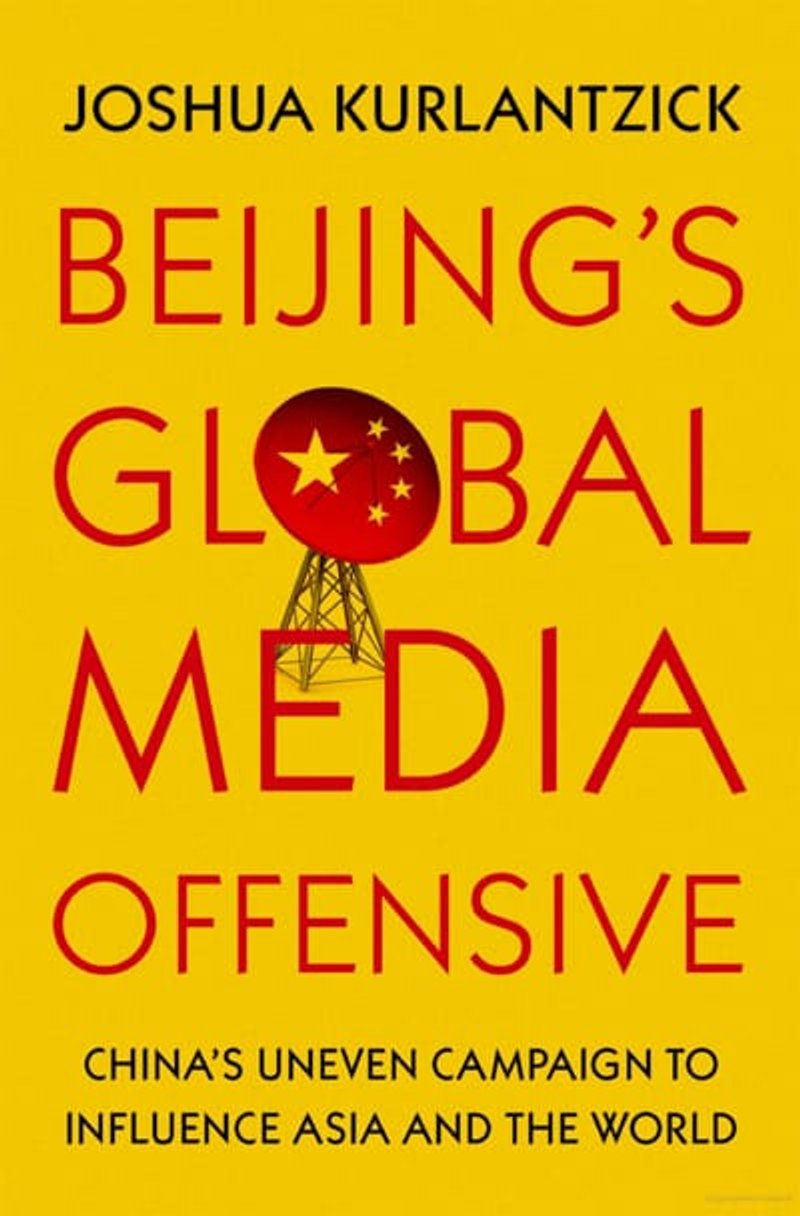
China’s state media, which it has lavished billions on, has had minimal effect on populations around the world, other than Xinhua, which is slowly gaining an audience. In studies I obtained conducted by the Gallup research organisation, big Chinese state media such as China Global Television Network and China Radio International still have almost no audience in most of the countries they operate, because despite their spending they serve up a bland news diet. They are also increasingly banned in liberal democracies, including the United Kingdom and Australia.
China may have meddled in Australian politics, and tried to do the same in Malaysia, Taiwan, Thailand, the United States, Canada and other countries during election seasons, but its efforts often have been caught – and worked against Beijing. China’s attempts to insert itself into the 2018 Malaysian national elections actually helped Mahathir Mohamad’s coalition, which espoused fairly hawkish views on China, win the race. And Beijing’s outright meddling in the 2020–21 Taiwanese presidential election, using pro-Beijing media outlets in Taiwan and other tools to support KMT candidate Han Kuo-yu, failed miserably. Easily exposed, it angered many Taiwanese and helped the Democratic Progressive Party’s Tsai Ing-wen, despised by Beijing, win a second presidential term.
Similarly, meddling in Australia, the United States and the United Kingdom has led to tough new laws on interference in Australia, a crackdown on foreign influence in America, and likely similar legislation in much of continental Europe in the near future. It has also resulted in publics ranging from Northeast Asia to Europe to North America to Australia developing intensely negative views of China, exactly the opposite of what Beijing needs to wield effective soft power. (Backing Vladimir Putin hasn’t exactly helped China’s global public appeal either.)
Even on university campuses and on social media, where fears have grown that Beijing is fostering intensive self-censorship and spreading rampant disinformation, China has had only mixed success. Its disinformation efforts, though becoming more sophisticated, still remain fairly clumsy in much of the world, compared to those of Russia, for instance.
On campuses, high-profile incidents of self-censorship have led to the closure of Confucius Institutes, a major source of Chinese soft power, in many liberal democracies; within a few years, nearly all will likely be closed in North America, Europe and Australia. In places such as the United States and Europe, China’s efforts to pressure students on campus and foster self-censorship have further sparked legislative inquiries into campus freedoms, undermining Beijing’s goals.
And even China’s biggest weapon, its ability to wield economic coercion against states that anger it, has been blunted somewhat, as its blows against Australia did not decisively weaken the Australian economy, and its attempts to bully smaller states such as Lithuania made it look foolish, and rallied European countries to that Baltic state’s side.
Overall, then, foreign interference is a serious worry – but it is important to see China’s flaws and mistakes right now, to understand what it is doing wrong – and help prepare for how it might adapt and do better in the future.