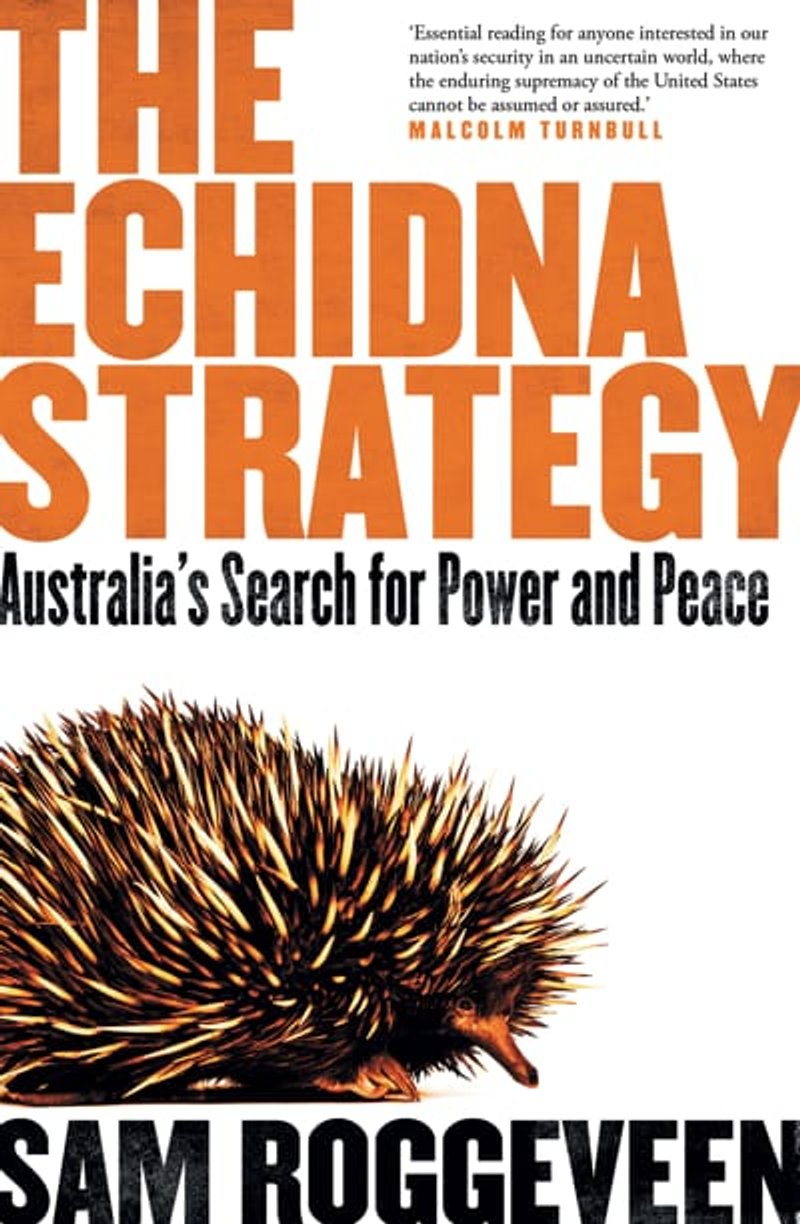
The big strategic question, raised squarely by the AUKUS submarine acquisition decision, is how long the echidna’s spiky quills need to be. Roggeveen argues, unequivocally, not long enough to be able easily to mount hostile operations against Chinese territory or in its near seas: “why compress the distance between us when we can exploit it?” The kind of capability our new nuclear-powered boats offer in this respect – if they are ever delivered – would no doubt be a useful marginal addition to US firepower in those waters should conflict erupt. But any such use would dramatically raise the stakes in terms of China’s hostility towards Australia. And, from my own direct experience as Foreign Minister during the first Gulf War, good luck in pretending that we will retain in practice any sovereign agency in resisting Washington’s pressure to so use them in any conflict.
Roggeveen’s bottom line, I think irresistible, is that while Australia still benefits from American intelligence and logistics support, and we should not walk away from the ANZUS alliance, we are seriously misguided in clinging ever more closely to it at a stage in our history when real US commitment to our national interests is not assured. Our enhanced attachment to the alliance risks making us more rather than less vulnerable, and genuine defence self-reliance is ever more necessary.
One of the most interesting and perceptive chapters in the book argues for reversing the weight of ambition in our foreign and defence policies. Australia, Roggeveen says, “should stride onto the world stage as a diplomatic powerhouse, not a military one”, and he identifies three priorities in this respect for Australian statecraft. One is to advocate for a regional order focused on power-balancing rather than ever more intense strategic competition for primacy between the major players. This aspiration is clearly shared by Foreign Minister Penny Wong, and important for Australia to articulate, but one where we can’t expect our middle-power influence to be decisive. Another of Roggeveen’s priorities, on which we can hope for more traction and are already starting to work hard, is taking our Pacific neighbourhood more seriously, with more climate focus, aid, investment, labour mobility programs and defence cooperation.
For me, as for Roggeveen, the most critically important of our priorities in statecraft should be to dramatically intensify our relationship with Indonesia. A great power in the making, Indonesia presents by far as the most capable regional counterweight to China’s more hegemonic ambitions, and a country with whom – given its size and geography – our friendship is indispensable to our security. Our ambition should be to get back to the kind of unprecedented intimacy and mutual confidence we managed to achieve with the 1995 Australia-Indonesia Security Treaty negotiated by Paul Keating. I live in hope.
Roggeveen is no hard-core leftie. A senior Office of National Assessments intelligence analyst before joining the Lowy Institute 15 years ago, he describes himself, entirely plausibly, as a liberal-conservative, no China dove and not anti-American. Some of the positions he takes are rather too conservative for my taste – such as the comforting belief he seems still to have in the deterrent utility of nuclear weapons. But when a voice like his makes the formidable case, which he does in this book, that current conventional wisdom is misguided, that our defence and security policy is running off the rails and demands a fundamental rethink, it deserves to be heard, and taken very seriously indeed.