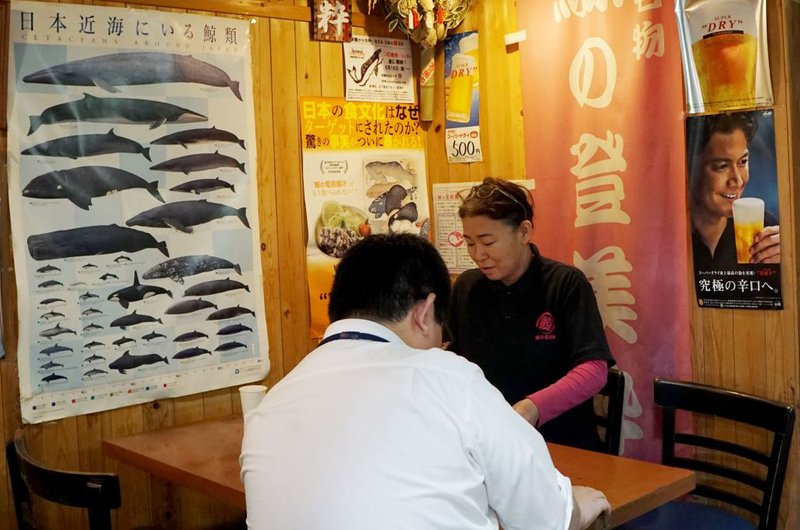
After repeated IWC knock backs, Japan announced its intention to withdraw from the Convention and IWC on 26 December 2018 which took effect on 30 June. Japan, has however, indicated that it wishes to attain IWC observer status, where the next plenary meeting is not scheduled until 2020.
To date the response to Japan’s IWC withdrawal from the international community has been muted. This no doubt has partly been one of the knock-on effects from the Osaka G20 summit, where there would have been a desire to not embarrass Japan as host. That Japan did not release the final details of the 2019 quotas until after the G20 had ended also suggested some sensitivity from Tokyo to the issue. Australia’s Prime Minister Scott Morrison did not directly raise the issue of whaling with his Japanese counterpart Shinzo Abe during the G20, and has indicated that he does not wish to have the Australia/Japan bilateral relationship defined by the issue. There are also other mutual economic, trade and regional security issues that both countries are currently addressing.
Australia’s position then on Japanese whaling would appear to have shifted from the heights of the Rudd Government in 2007–2010 when the then environment minister Peter Garratt, along with Kevin Rudd, were at the forefront of the diplomatic and legal initiatives that eventually brought Japan before the International Court. Australian Foreign Minister Marise Payne’s issued a statement on 2 July observing that:
“While the Australian Government welcomes the end of whaling in the Southern Ocean, we are disappointed that Japan has withdrawn from the Convention and is resuming commercial whaling. We continue to urge Japan to return to the Convention and the Commission as a matter of priority.”
What then are Australia’s options if it wishes to continue to be the champion of whale conservation and to oppose all forms of commercial whaling?
There are legal options that could be pursued, especially under the 1982 United Nations Convention on the Law of the Sea where under Article 65 Japan is under an obligation to “cooperate with a view to the conservation” of whales, including working with the IWC for their conservation, management and study. However, the Morrison government has given no inclination that it is considering taking Japan back to an international court.
Australia will need to be resolute though if it wants to retain its opposition to commercial whaling. Japan’s actions may encourage others to rethink their stance on whaling. Iceland and Norway have over the years moved in and out of the IWC and, like Japan, maintain a small commercial whaling industry. Could then these recent events prove to be a tipping point for the IWC?
That Japan will remain an IWC observer at least allows for continuing dialogue. If Japan did to return to the IWC as Australia hopes, there is always the prospect that Japan could enter certain reservations so as to exempt itself from some of the constraints that it previously faced as both Iceland and Norway have done. Japan may have left the IWC, but its impact will be ongoing.
Donald R Rothwell