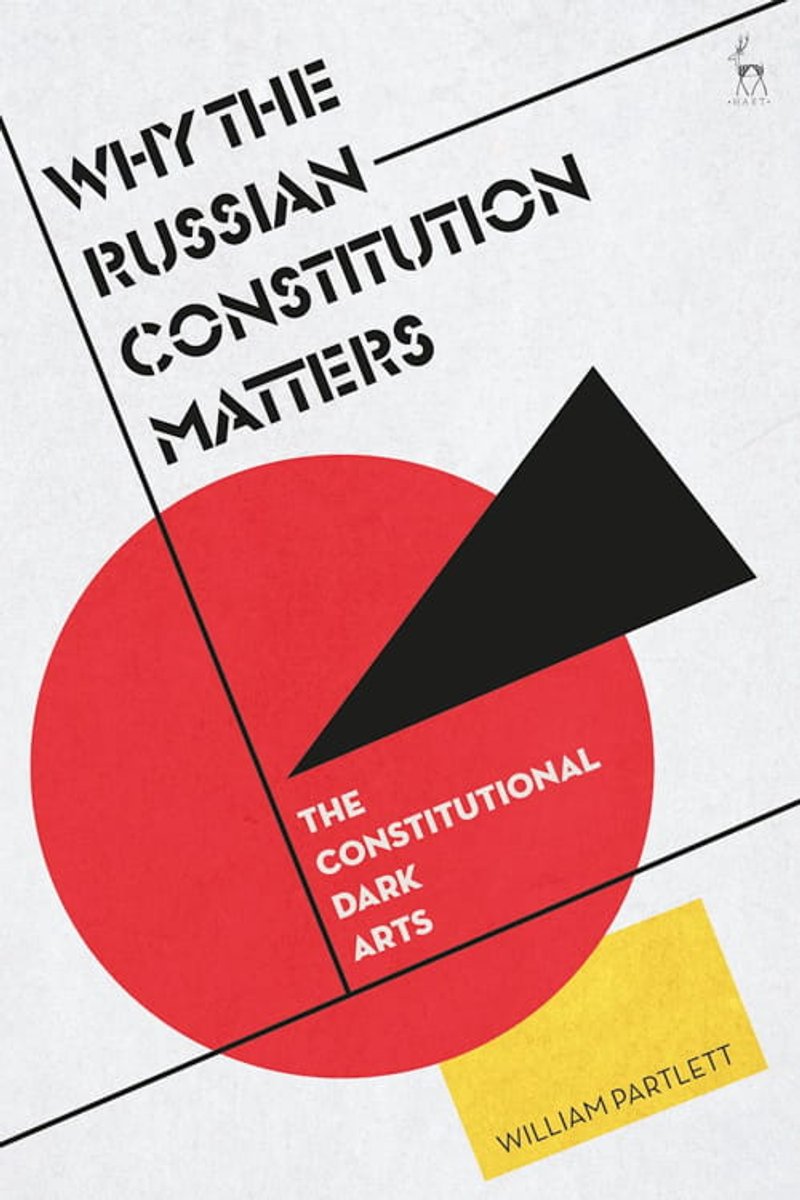
The Russian Constitution is 32 years old today. When it was ratified, Western leaders, scholars and Russian liberals viewed it as an important step toward establishing Russian democracy and protecting individual rights. Today, it is widely regarded as a failure, another casualty in Vladimir Putin’s brutal seizure of power.
Research captured in a recently published book challenges this conventional view, showing how Vladimir Putin used the Russian Constitution to restore authoritarianism in Russia. Moreover, the Constitution continues to underpin Russian authoritarianism and will be an important part of the future of a post-Putin Russia.
The Russian experience teaches us not only about Russia but also more broadly about a neglected constitutional tactic at the heart of a new legalistic form of authoritarianism that is rapidly spreading around the world.
This tactic is also growing in power in well-established democracies
The book argues that the surprising importance of the Russian Constitution to Russian authoritarian can be traced to a tactic it calls the “constitutional dark arts”. This tactic involves a constitution that centralises vast power in the president as an expedient for ensuring constitutional democracy and individual rights. In early 1990s Russia, a constitutionally dominant President was justified as critical for ensuring both the democratic guarantees and the long list of rights in the Constitution. In particular, many argued that presidential dominance was necessary to allow then president Boris Yeltsin to overcome the economic and political emergency unleashed by the collapse of the Soviet Union as well as decisively break with the remnants of the Soviet past and build liberal democracy.
This kind of emergency, transitional constitution allowed Yeltsin to overcome the obstacles of the time. But it was a dangerous foundation for a stable, long term liberal democracy. In particular, it staked everything on the person who occupied the office of the Russian Presidency.
This became particularly clear when Yeltsin chose Putin as his successor. Soon after becoming President in early 2000, Putin began to systematically use the vast constitutional powers of the Russian Presidency to eliminate checks on his power and consolidate his personal control over Russian politics. He remains in power now 25 years later.
The “constitutional dark arts” are now an increasingly common tactic for building authoritarianism around the world. Popularly elected leaders argue that the centralisation of vast constitutional power in their office (whether it is president or prime minister) is necessary to overcome a crisis and guarantee liberal democracy. This centralising project is particularly influential in countries with low levels of trust in government; in those contexts, an unmediated democratic link between the people and an empowered elected leader is described as the best way to restore democracy.

This tactic has been highly influential in the construction of a legalistic form of “new authoritarianism” in fragile democracies. In Türkiye, for instance, President Recep Erdogan used an attempted military coup in 2016 to make drastic changes to the country’s constitution, changing it from a parliamentary system into a presidential one that consolidated immense powers in his own office. He has since used these powers to ensure his re-election and dominate politics. In Hungary, Viktor Orban has rewritten the constitution in a way that has ensured that, as Prime Minister, he can dominate politics. He has largely governed by decree for the past five years. Indonesian President Prabowo Subianto has used the growing constitutional powers of the Presidency over institutions such as the Attorney-General’s office to discipline his opponents. His political movement has also called for returning to the original, authoritarian 1945 Indonesian Constitution in order to secure an Indonesian form of “polite democracy”.
This tactic is also growing in power in well-established democracies. The United States is perhaps the best example, where the Trump administration claims that centralising presidential power over the entire administrative state – including independent agencies such as the Federal Communications Commission or the Federal Reserve Bank – is necessary to make America great again and restore democracy.
The rise of these constitutional dark arts is important to Australia.
First, it helps us to better understand a tactic that is reshaping the internal politics of key allies and trading partners. If this tactic continues to be influential, Australia must adapt to a new world of strongmen in which diplomacy is increasingly personal and transactional. This new world will be increasingly unpredictable and violent.
Second, it is a cautionary tale for Australian democracy, a reminder that stable democracy cannot be built on constitutional system in which power is centralised in one office. Instead, democracy can only be stably grounded on a constitutional system that distributes power between different institutions that ensure accountability and deliberation.