The reliance of the Pacific on Australian media delivered via Facebook can be seen in audience figures for sources regarded as credible. Early in the pandemic, after the Australian Broadcasting Corporation (ABC) increased its Covid-19 news in English and Tok Pisin, its Facebook page saw a 45% increase in engagement, achieving 1.9 million page impressions in the months to April 2020 (as explained in an ABC submission to a parliamentary inquiry into Australia’s relationships in the Pacific).
The Pacific Newsroom – an Australian-based Facebook aggregator of news from Australia and the region, curated by respected industry professionals – has attracted more than 22,000 members since it started three years ago and provides a valuable forum for debate on media accuracy.
During the Facebook news ban, both the ABC and the Pacific Newsroom were among the high-quality Australian pages blocked. While some accurate information remained accessible via Pacific-based Facebook groups (such as the Fly River Forum in PNG) and Pacific media, the risk of misinformation remained. During Covid-19, verified information and news has been vital to people’s health and economic security, but multiple reports have shown that misinformation has been rife.
Facebook’s settlement with Australia has not resolved everything. In the past, Pacific governments have either blocked Facebook or threatened to do so (as in PNG, Solomon Islands and Samoa). In neighbouring West Papua, the internet has been switched off.
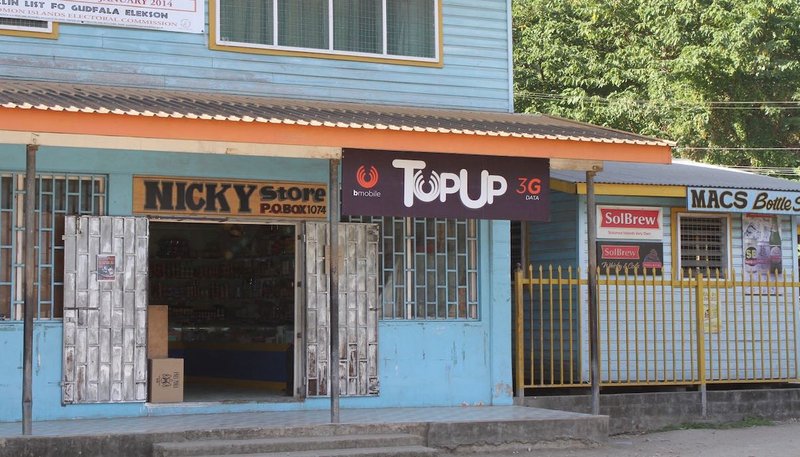
Of course, many Pacific Islanders do not have access to the internet and rely on other sources of information such as print and broadcast media or churches. According to GSMA, mobile internet uptake is very low by world standards, at just 18% of the Pacific population. Keeping a telephone handset battery charged can be a challenge in parts of the Pacific. The internet is expensive, compared with other regions.
Newspapers, radio and television are trusted sources of information, but in recent years major services have been degraded. The ABC’s international service is a case in point. In 2014, it lost 60% of its staff and with them most of its tailor-made programs for Pacific audiences. FM radio transmission across most of Micronesia was also cut at that time. In 2017, the closure of the ABC’s shortwave radio service affected a wide audience, some of whom lived in remote areas with little or no other media access.
While the ABC has initiated some new content and services for the Pacific and Vanuatu has installed its own shortwave radio network, the lesson across all technologies is clear: information security in the Pacific is not assured.
If informed and engaged citizens are vital to democracy, development and good governance, Pacific people cannot afford to be dependent on just one content provider – be that a billionaire tech entrepreneur, a regional or national broadcaster, or a telecommunications company.
Amanda Watson , Jemima Garrett