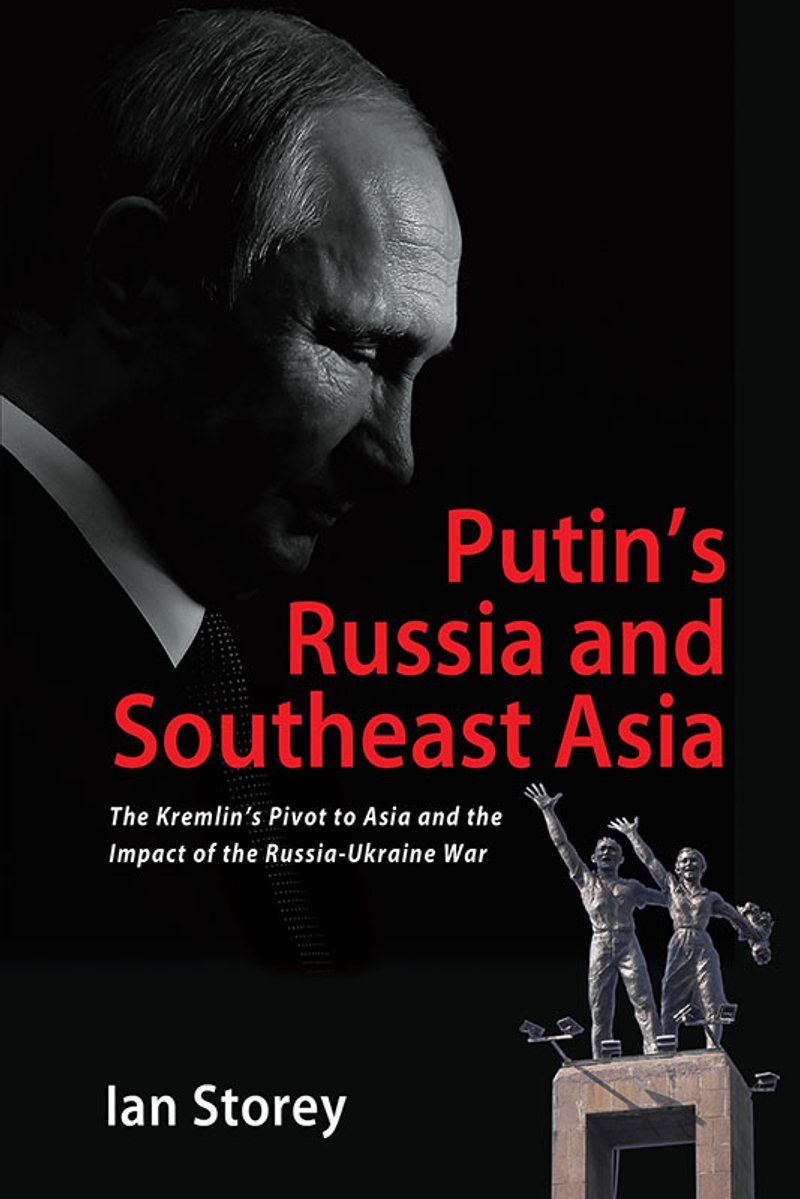
The book also delves into key dynamics shaping Southeast Asia’s regional order. Storey notes Moscow’s support for Hanoi through oil and gas exploration, set against Beijing’s claims in the South China Sea. Some drilling sites fall within China’s nine-dash line, where Vietnam continues to press forward and Russian companies have engaged in joint exploration. Russia does not appear to seek China’s approval, and that may remain a point of contention in the evolving Moscow-Beijing partnership. The South China Sea is not a core Russian interest, and Moscow has so far offered no constructive solutions to the disputes. This suggests that Moscow’s engagement is bilateral, issue-specific and less interested in conflict resolution.
Second, Moscow positions itself as a counterweight to China and the United States, promoting multipolarity and courting Southeast Asian elites and public in countries such as Indonesia or Malaysia. While part of Russia’s argument holds some ground, particularly in nominally recognising the agency of regional states and their capacity to navigate great power competition in pursuit of a more inclusive order, Moscow’s rhetoric often drifts into a pronounced anti-Western posture. Russia’s institutions and media reinforce this, amplifying messaging about the West’s perceived decline and hypocrisy, often through active and opportunistic disinformation. The book does not explore this dynamic in too much detail, but local scholars are increasingly looking at Russia’s role in their own countries.
Only a handful of regional states, such as the Philippines and Singapore, have condemned Russia’s invasion of Ukraine, as many governments continue to view Russia as relatively “benign.” Storey’s explanation of this perception offers valuable insights for Western diplomats engaging in the region.
But he also explains why Russia struggles to secure a stronger foothold in Southeast Asia. Despite being the region’s largest arms supplier and having some ideological appeal, its trade links remain modest. Regional interest in the BRICS – the bloc of emerging economies including Brazil, Russia, India, China and South Africa, with Indonesia now a member and Malaysia, Thailand and Vietnam recently becoming partner countries – stems more from expectations of Chinese largesse than by Moscow’s economic clout. Some Russian policy documents designate Southeast Asia as a priority, but it remains uncertain whether Russia can sustain a genuine pivot amid domestic economic strains.
Storey does not delve into Russia’s potential role in a Taiwan contingency, perhaps staying within the geographical definition of “Southeast Asia”. But the impact of a cross-Strait conflict would be highly consequential and could involve the region directly or indirectly. As the Philippines, Japan and South Korea weigh their options, Moscow may also consider its own, mindful of its foothold in Northeast Asia. While open‑source Russian reporting rarely addresses a Taiwan contingency, Moscow is nonetheless likely to play some role – perhaps more indirect than direct. A key consideration here is the extent of Sino-Russian security cooperation (or as some say “quasi-alliance”) and in what ways Russia and China are equals, like-minded or merely pragmatic partners. It is worth noting that recent Russian opinion pieces drew parallels between the deployments of US Typhon missiles (missile launchers loaded with mid-range projectiles such as the Tomahawk system that have both offensive and defensive capabilities) by Tokyo and Manila, which may suggest at least overlapping threat perceptions by Moscow and Beijing given their reach.
The book is essential reading for historians, scholars of Asian geopolitics and practitioners based or interested in the region, including Western audiences who are interested in how Russia is seen elsewhere. By providing a general overview, the book also encourages local voices to critically reflect on Moscow’s role in Southeast Asia.
Putin’s Russia and Southeast Asia: The Kremlin’s Pivot to Asia and the Impact of the Russia-Ukraine War, by Ian Storey (ISEAS – Yusof Ishak Institute, 2025)