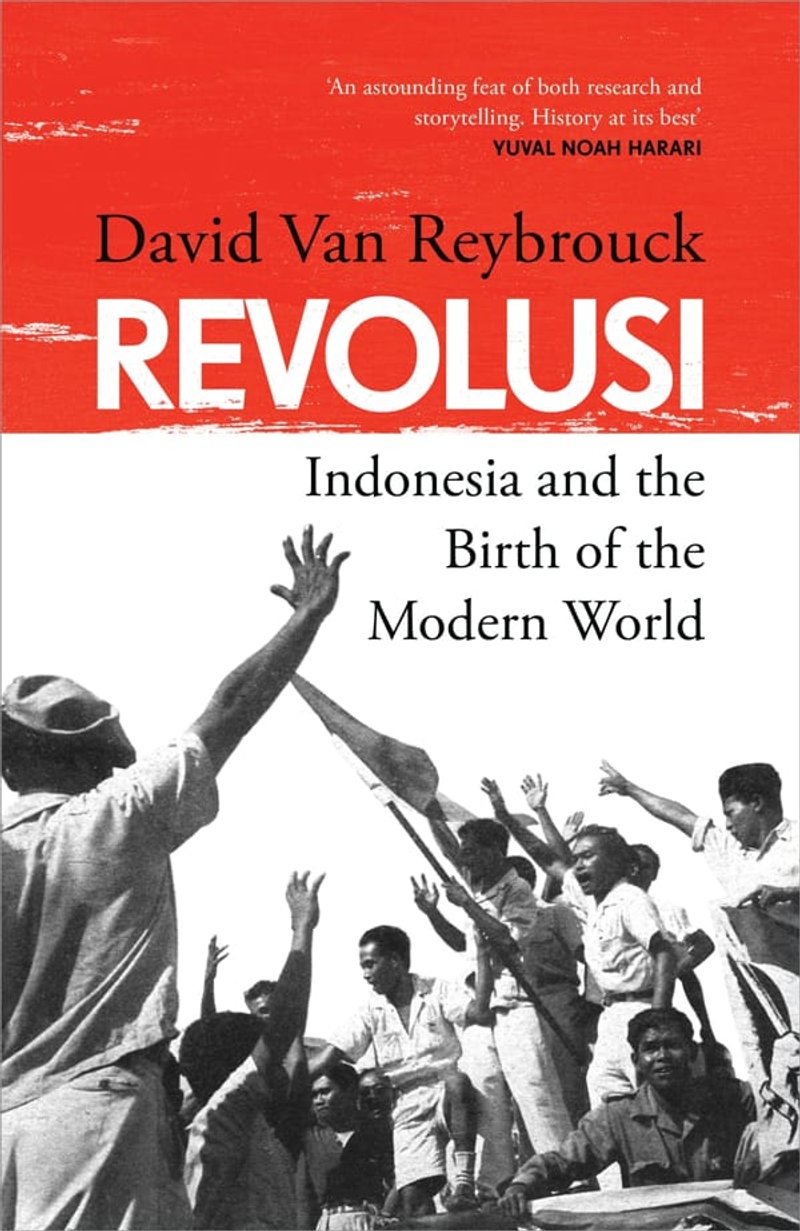
Book Review: Revolusi: Indonesia and the Birth of the Modern World by David Van Reybrouck (Norton, 2024)
In survey of public opinion in former colonial powers a few years back, the Dutch demonstrated more pride in their colonial history than did the British: 50 per cent against 32 per cent. For France, the figure was 26 per cent, and Belgium, unsurprisingly, only 23 per cent. Only 6 per cent of Dutch were ashamed of their performance, and just over a quarter wished their country still had an overseas empire.
Revolusi, David Van Reybrouck’s history of the Indonesian colonial experience, might disabuse them. In this opinionated history – history with attitude – he sees much to be regretted.
What is a Belgian doing criticising the Dutch? Isn’t Belgium’s record far worse? Van Reybrouck doesn’t make explicit comparison, but he has written with equal frankness about the Belgian colonial past.
In the course of this latest narrative, Van Reybrouck records explicit atrocities, including the genocide on Banda in 1621, and the puputan invasions of Bali in 1906 and 1908, where the Dutch troops used machine guns and artillery against the krises of the defending Balinese royalty and retainers. And during the post-Second World War independence struggle, Captain Westerling’s death-dealing “brute theatrical violence” against civilians in Sulawesi and the more widespread (if less systematic) war-crimes that only came to public notice in 1969.
But these shocking events are just elements of a broader lamentable colonial story, transforming from the spice-trade-based commercial operation which required just a few trading bases to an intrusive land-based colonial system based on sugar, rubber, tea, coffee and tobacco, with opportunities for skimming off the agricultural surplus – enough to provide one third of Dutch budget revenues.
Van Reybrouck also introduces an image which serves as a microcosm for colonial society: the Dutch East Indies era company KPM trading vessel Van der Wijck, which sank in the Java Sea in 1936. Steaming ahead with some lower portholes unintentionally left open, it took on water, gradually listed, then overturned suddenly with great loss of life. Its three-class decks parallel the three-level social system: the top deck was occupied almost exclusively by the Dutch; the second deck housed the tiny group of educated Indonesians, many of whom collaborated with the Dutch; the Indonesian masses travelled in crowded isolation down below.
This image sounds contrived, even corny. Is this a reboot of Titanic: top-deck toffs revel, steaming heedless towards their inexorable fate? But it works well when Van Reybrouck arrives at his main interest – the independence struggle, taking shape in the early decades of the 20th century.