Putin could hardly be tried by his compliant, corrupt Duma, but Pétain had precedent on his side in expecting a trial by parliament. Charles I and Louis XVI were both accorded that right, albeit with purged and cowed assemblies sitting in judgment. Instead, Pétain’s guilt was appraised by an unlikely, unwieldy combination of former parliamentarians and former members of the resistance. Anti-corruption activist Alexei Navalny might as well be enlisted as a juror for Putin.
Stalin’s purges are conventionally denounced as show trials because of the absence of due process, the foregone conclusions and the seemingly random selection of many victims.
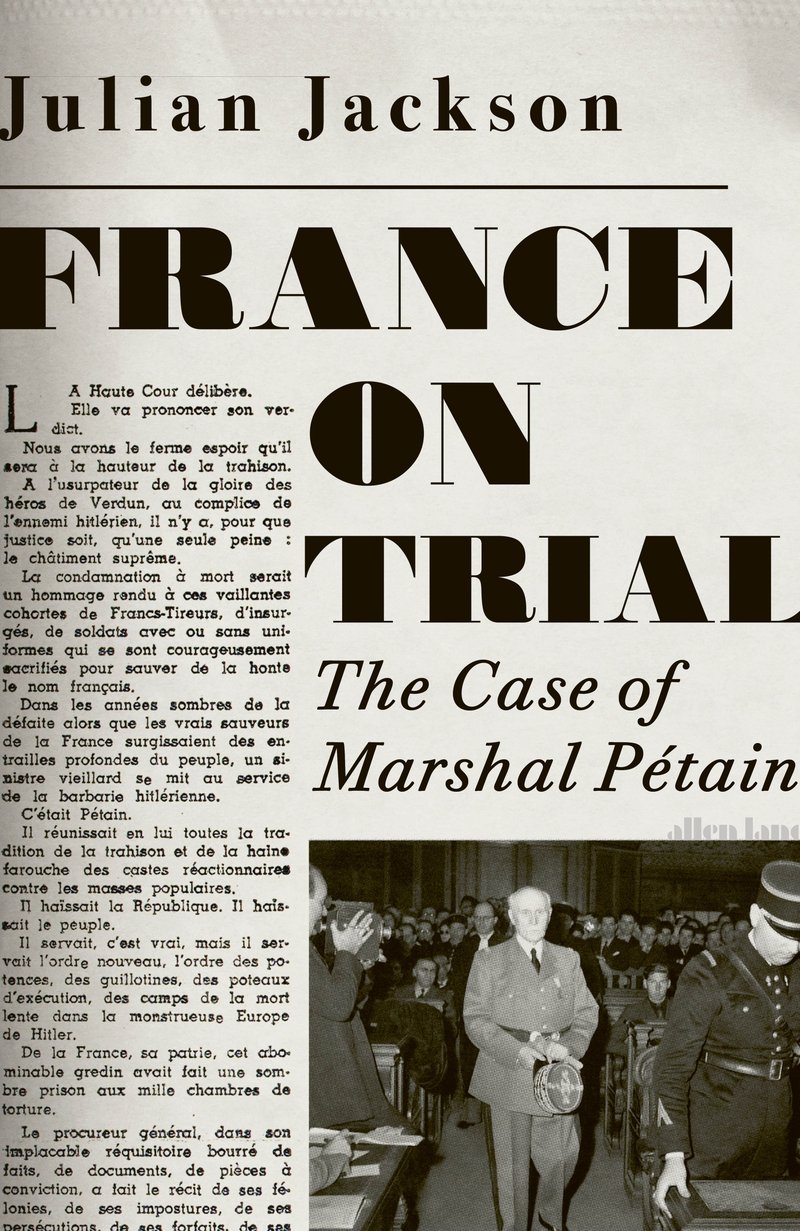
Nonetheless, any war crimes trial, including those of Albert Speer, Hideki Tojo and Adolf Eichmann, contains an element of show and tell. Julian Jackson in France on Trial: The Case of Marshal éétain designates them as “exercises in national pedagogy”. Their process and record are meant to teach morals, not least by setting limits on acceptable behaviour. For France, Pétain’s trial also provided a biased, partial explanation of why France had suffered the most rapid and total defeat of any Great Power in history.
During his trial, Pétain’s answers blended “evasion, blame-shifting, amnesia and perplexity”. He maintained that, absent an armistice and without a puppet government, France’s fate would have been worse (like Poland’s, say). “If I could no longer have been your sword, I have wanted to be your shield.” Imagine how much more defiantly articulate Napoleon would have been had he been brought to trial.
Notwithstanding the dispiriting ambivalence in Pétain’s three-week trial, about treason especially, Jackson does raise questions relevant today, and tomorrow. When can personal responsibility be dissolved into collective culpability? Where does patriotic duty lie after military defeat? Should trying a leader be a prelude to convicting his accomplices, reaching how far down? Can a legal government properly be considered as void of legitimacy?