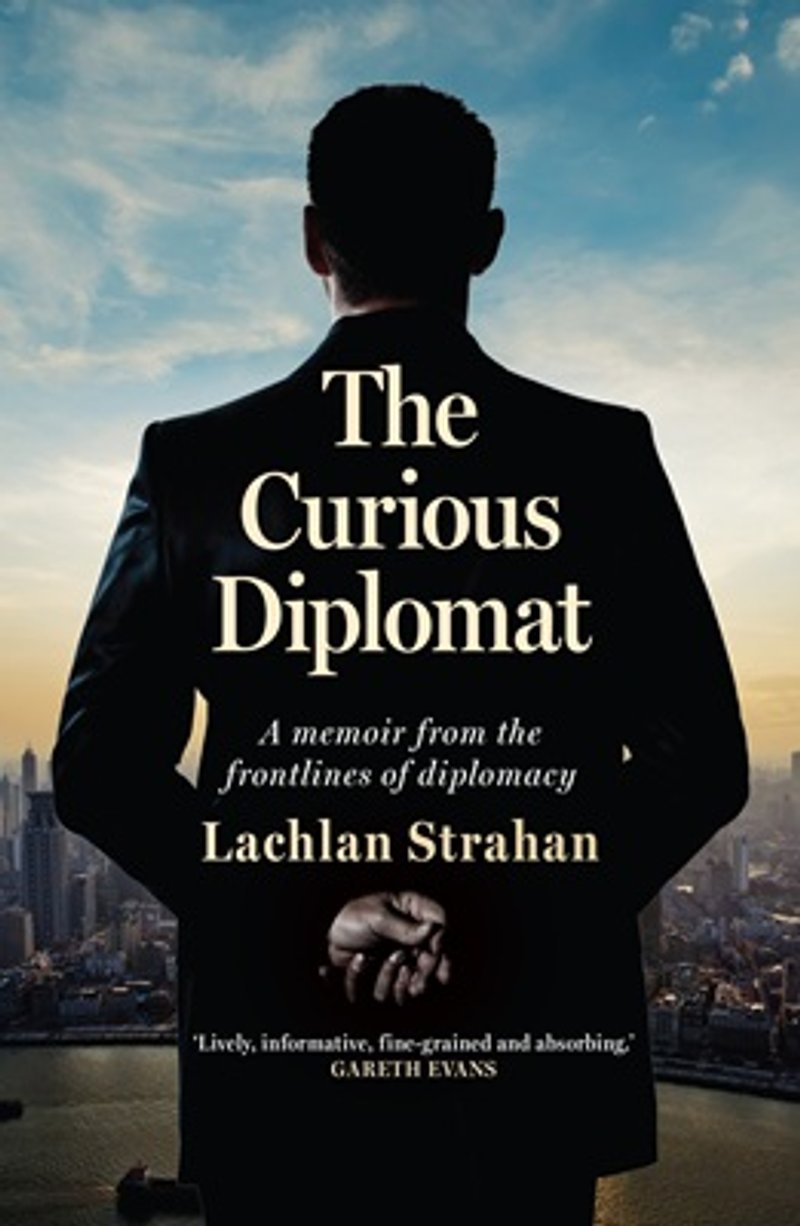
As I finished writing The Curious Diplomat, a friend asked me a good question: Is there a distinct Australian style of diplomacy? I mulled that over, quizzing other diplomats – Australian and non-Australian – and arrived, perhaps unsurprisingly, at a mixed answer.
The Department of Foreign Affairs and Trade is a large organisation and contains a range of personality types who approach the job in different ways. Australian diplomats also operate inside the parameters of long-established international diplomatic conventions and practices. Although some folk celebrate the anti-establishment larrikin tradition, most Australians are law-abiding and somewhat conformist.
Nevertheless, while I don’t believe in the existence of a fixed and consistent national character, I think it’s possible to say that many Australian diplomats reflect aspects of how Australian society is put together. These traits come into sharper definition when our diplomats are compared to their counterparts from other countries.
We tend to be more informal, approachable and egalitarian than many of our peers, especially those from countries with more ceremonial or hierarchical cultures. This makes us less preoccupied with the trade’s more flowery conventions, such as long-winded diplomatic notes and elaborate courtesies.

Although we continue to struggle with our fair share of problems, including inequality and racism in some quarters, contemporary Australia is more open and inclusive than many other countries. Reflecting this pattern, Australian diplomats mostly get on well with a diverse range of people, in part because we generally don’t have tickets on ourselves and are curious about the outside world. Small things bear this out. Our ambassadors and high commissioners tend to have more modest residences and do not carry their official titles into retirement, unlike, say, the Americans.
Yet one of my British friends told me that she found some of her Australian interlocutors to be more formal than expected. This could be true at times. Some Australian diplomats might be more careful about minding their Ps and Qs around the British to avoid any resemblance with Sir Les Patterson, the obnoxious Australian cultural attaché created by the comedian Barry Humphries.
Mind you, my friend also thought Australian diplomats at their best were “ruthlessly focused on the national interest and not afraid to pursue it”, even to the extent of “occasionally pissing off an ally”. All in all, she thought we were excellent partners.
Australian diplomats typically don’t beat around the bush, don’t like bullshit and don’t thump tables. We are often straight-talking and unlikely to play games. Other people usually know where they stand with us.
One Asian diplomat told me he found his Australian counterparts plain-speaking to the point of being blunt, “calling a spade a ‘bloody shovel’ and belabouring a point”. He added, though, that he had found Australians were loyal and stuck with you when they had made up their minds to do so. My New Zealand opposite number during one posting observed that Australians were brasher than Kiwis, which is true enough.
Despite the relative informality, Australian diplomats do not take the job lightly. We pride ourselves on being well prepared, methodical and practical, thinking laterally and flexibly. We have a strong sense of ethics, but proceed with a good dose of pragmatism as well. We generally aren’t ideological. We usually come to the table to find a solution and solve a problem. Not all countries do so. Some cause trouble, almost with relish.

Many Australian diplomats like to be liked and are uncomfortable going it alone.
Another factor probably shapes the Australian diplomatic style: Australia has more freedom of manoeuvre because we don’t belong to a grouping like the European Union, NATO or the Association of Southeast Asian Nations.
Yet this freedom has a flipside. Many Australian diplomats like to be liked and are uncomfortable going it alone. Some other countries are prepared to be a minority of one, even by flipping the bird.
At times, we are perhaps reluctant to exert power where and when we can. That can be a drawback, limiting our options, but I think it’s mostly a plus. We aren’t big enough to throw our weight around and don’t want to be cast as bullies. It has also perhaps helped to forge an Australian knack for multilateralism.
Unfortunately, we have become too risk-averse, though, mostly because the political and bureaucratic system exerts tight control and does not reward boldness often enough.
It could be said that what I have described here is what many Australian diplomats, including myself, aspire to be and how we would like others to see us. Some of these traits are not unique to Australians. And people who have encountered boorish, arrogant, prejudiced or shifty Australian diplomats would come up with a different assessment.
Nonetheless, enough of the diplomats I worked with from other countries agree on some, even many, of the traits listed here to suggest that they have validity. And it is certainly important for a foreign service to have an ideal ethos or way of doing things, because that keeps you on your toes and pushes you to prosecute the country’s interests better and perhaps in your own way.
The Curious Diplomat by Lachlan Strahan is published by Monash University Publishing.