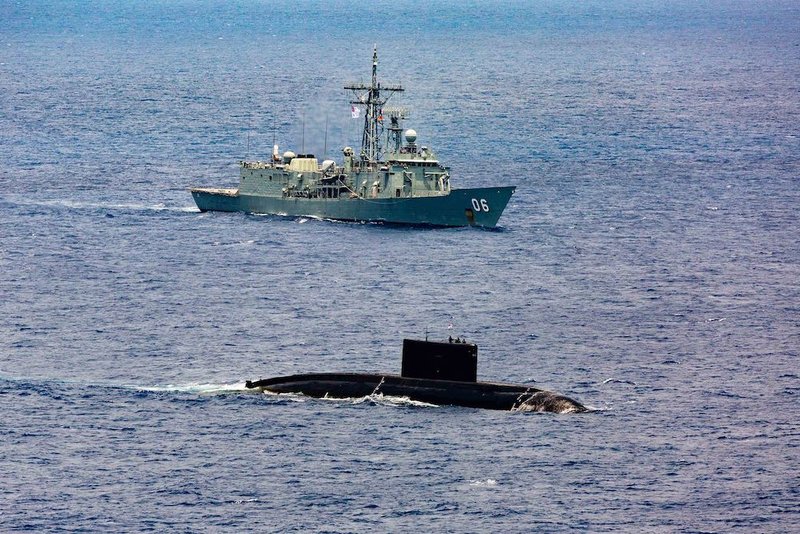
The reason for this position is unclear to anyone outside the Indian Foreign Ministry. In some respects it is consistent with India’s historical non-aligned baggage to oppose multilateral security cooperation, although the Modi government has for several years been steadily discarding those old taboos. But the addition of Australia to what is already trilateral exercises between larger powers would seem to make little practical difference. The theology of “three is good, four is bad” remains somewhat of a mystery.
Similarly, New Delhi has gone out of its way to publicly characterise the Quadrilateral dialogue talks among India, the United States, Japan and Australia as principally about economic cooperation – for example, to provide regional alternatives to China’s Belt and Road Initiative. It’s not about regional security at all. To what extent Beijing would believe this line is an interesting question.
New Delhi’s rather timid position on Malabar and the Quad may stem from concerns about offending Beijing. Since the Wuhan Summit between Prime Minister Narendra Modi and President Xi Jinping in April 2018, the Indian government has noticeably toned down its public rhetoric about China’s moves in the region, apparently in an effort to mitigate strategic competition between the two countries which has been ramping up in recent years.
Whether the so-called “Spirit of Wuhan” lasts much past India’s general elections next month remains to be seen, but few would see the Wuhan understandings as any sort of long-term truce between the two countries. Granted, the Himalayan border between the two has been relatively quiet since a major confrontation at Doklam in June 2017. However, there are few signs that China is slowing the expansion of its influence across India’s South Asian neighbours and elsewhere in the Indian Ocean region.
In all events, the Malabar exercises, at least in their current incarnation, have far more symbolic than substantive value for the participants. (And, given the negative political baggage that the naval exercise by that name seems to have collected in Delhi, it may be wise to re-badge them anyway.)
However, India’s position towards Malabar and its public down-playing of the Quad do point to real reticence on India’s willingness (or perhaps systemic constraints on India’s ability) to form meaningful balancing relationships against China’s assertive behaviour across the region.
But it might well be that after next month’s election the new Indian government has greater freedom to move Indian security policy beyond the highly restrictive boxes that Indian policy-makers sometimes impose upon themselves.
David Brewster