This new “war” is becoming entangled with conflicts in Syria, Lebanon, and Colombia, and threatening to break out in the camps of millions who have fled these and other wars. In Cox’s Bazar, Bangladesh, the fear among the Rohingya in the refugee camps is amplified by lack of information and separation from support networks, and intensified by the month-long effective ban on mobile-phone and internet usage imposed by the government of Bangladesh (the same has happened in Ethiopia, amid reports of government crackdowns on the Oromo Liberation Front). In Moria camp on Lesbos, Greece, asylum seekers cannot socially distance when 20,000 people are squeezed into a camp meant to accommodate 3000, and where they must queue for hours each day for basic food supplies. In overcrowded and unsanitary displacement camps in Somalia, people feel as if they are “waiting for death to come”.
Elsewhere, it is hunger, not the virus, that is feared – a serious concern in places such as Nigeria and the Democratic Republic of Congo if people can’t go out to work or sell to get money to feed families. In parts of Syria, it is “bombs falling from the sky and kids being blown to pieces” that remains the main worry.
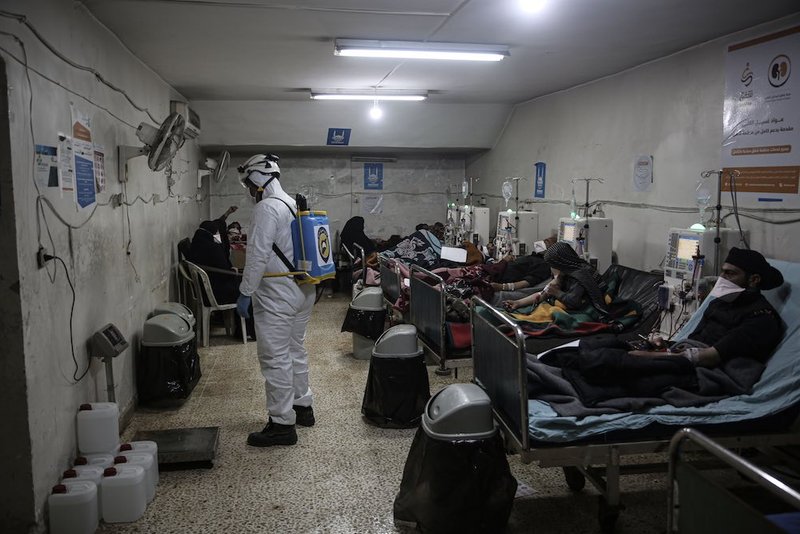
In Colombia, the virus is bringing with it deadly prison riots and the threat of escalating femicide. In Lebanon, a sense of dread prevails, as it does in Syria’s rebel-held north-west, among people already ill and frail, with little shelter, limited access to running water and healthcare, with little information and even less trust and confidence in authorities. And Iraq is already struggling to find enough hospital beds and to bury its dead, amid fears about how the virus is spread.
In many of these places, social distancing is difficult, water and soap are scarce, and most healthcare needs are already unable to be met. As the Médecins Sans Frontières (MSF) President has described, the concept of self-solation, and also self-care, in these contexts is a “luxury”. Hospitals have been destroyed or lack capacity and resources, including medicine, staff, and equipment. Governance structures are often weak or corrupt, economies shattered, and infrastructure destroyed or inadequate. Many people are unable to access basic services and essentials, including food, and have minimal confidence or trust in political leaders. In Iraq, for instance, a depleted healthcare system that enjoys little public trust will not be able to respond effectively if there is a serious outbreak.
For these reasons, conflict-affected environments are especially vulnerable to the outbreak of infectious diseases, are less likely to be able to identify and respond to outbreaks, and are less equipped to stop their spread within and beyond their often porous borders.