The asylum-seeking process in Greece lacks dignity and endangers lives. Yet, to make the country an even less desirable location for asylum-seekers, the Greek government has recently overhauled the asylum process, extending the maximum detention time from three up to 18 months – the limit under EU law – and removing state-funded legal assistance. In a bid to lighten the load on its islands post-Covid, refugees are routinely relocated to the mainland, where they face prolonged legal uncertainty, social exclusion, and even homelessness.
Further, Greece has deemed Turkey a “safe third country”, where they claim nationals from Afghanistan, Bangladesh, Pakistan, Syria, and Somalia are no longer routinely persecuted. Two-thirds of Greece’s total applicants are now required to first claim asylum in Turkey or risk being forcibly returned there if their case is deemed inadmissible in Europe.
Over 38 NGOs have denounced these decisions as breaching the principle of non-refoulement, citing that vulnerable persons can remain “irregular” in Turkey for years, experiencing violence, and lack of access to basic services.
Six years after the contentious EU-Turkey refugee deal was signed, swapping rejected applicants in Europe for approved ones in Turkey, it’s clear that externalising Europe’s migration problems has proved unsustainable. Despite the €6 billion given to fund EU-sponsored Facilities for Refugees in Turkey, they are sagging under the pressure of hosting over four million refugees.
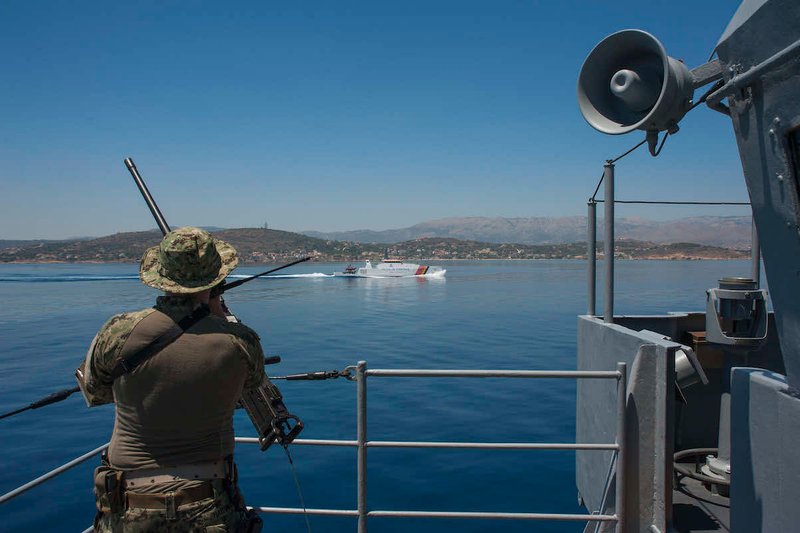
Greek-Turkish relations reached a nadir in February 2020 when President Recep Tayyip Erdoğan accused the EU of empty promises and “opened the gates” to Europe, ordering police to allow thousands of desperate people to flee towards Greece’s land and maritime borders. The violence that erupted was soon quelled by the pandemic-led border restrictions, momentarily muffling hostilities between Greece and Turkey.
As EU funds remain under-utilised and governments swap tit-for-tat brinkmanship, thousands of men, women, and children remain stuck, caught between pushbacks, detention, and an uncertain future in Europe – and that number is threatening to grow.
Dominic Simonelli