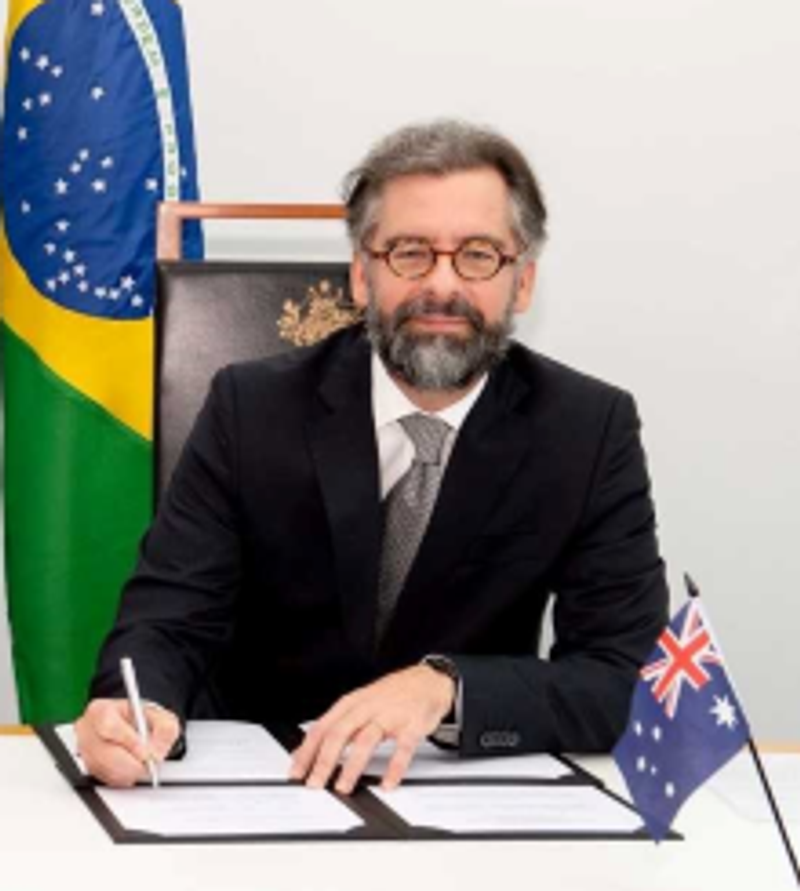
Lyrio, pictured, points to Brazil’s energy mix and the development of renewable sources of power as a further opportunity for sharing expertise with Australia. Whereas Brazil is blessed by the amount and volume of rivers in the country, with hydropower providing three-quarters of electricity supply, Australia predominately depends on fossil fuels. Ambitions are also growing for hydrogen investments.
The two countries are also G20 members but have intriguingly different diplomatic alignments within that forum. While Brazil has the BRICS – joined with Russia, India, China and South Africa – Australia sits with MIKTA – Mexico, Indonesia, South Korea, Turkey – and sometimes the traditional G7 nations.
Again, Lyrio doesn’t see an obstacle.
“In big global and political issues, despite the fact that we pertained to different groups at times, we are in many groups together.” He again points to common interests in trade, as well as the drive for nuclear disarmament. “I would dare to say that Brazil and Australia share much more values in terms of the multilateral agenda than our countries share with big powers.”
This extends to Russia following the invasion of Ukraine.
“Some countries adopted economic sanctions against Russia and some others didn’t. Since Brazil is against unilateral sanctions without endorsement by international organisations, Brazil did not adopt sanctions against Russia, but at the same time, Brazil and Australia are very respectful [and] supportive of the UN Charter and against any violation of it. That is why Brazil voted against Russia in the United Nations both in the General Assembly and in the Security Council.”
“As middle power countries, if we can use this bit of an antiquated term, we have the interest of strengthening the rule of law in international relations, making international organisations stronger.”