The Indian Ocean is also increasingly in play, forcing Australia to pay much more attention to building security partnerships there. One valuable and growing security partnership with Sri Lanka which holds a pivotal strategic location in the northern Indian Ocean. Its navy is small but highly professional and it urgently needs to expand its capabilities.
Australia’s interests in Sri Lanka’s maritime security is nothing new. Indeed, the gift of two Bay Class offshore patrol vessels to Sri Lanka in 2014 was a highly successful example of Australia using retired warships for mutual benefit. Australia was then at the receiving end of people and drug smuggling operations out of Sri Lanka. The gift of the offshore patrol vessels, along with sustained engagement by the Australian Federal Police and Border Force, led to a close security partnership between the two countries that successfully shut down these operations. It is a model of how enlightened self-interest can, in the right circumstances, improve the security of the region and Australia.
But after five years there is now a risk that people smuggling from Sri Lanka will resume. In May, the Australian Border Force intercepted a boat load of some 20 people headed for Australia. They were landed briefly on Christmas Island before being quickly flown back to Colombo with a modicum of fuss. Home Affairs Minister Peter Dutton quietly visited Colombo earlier this month in an effort to head off another possible round of maritime arrivals. Clearly there is value for Australia in consolidating and building the relationship.
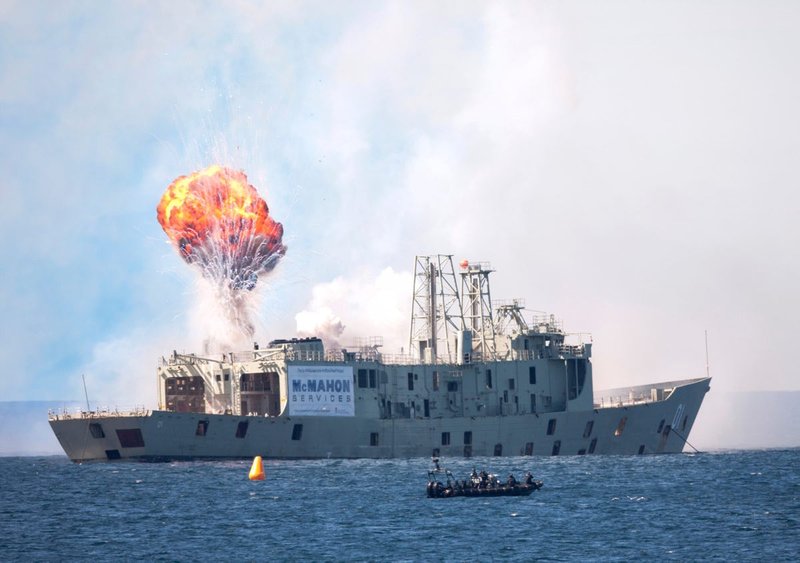
The transfer of the Newcastle or Melbourne would be a game changer for the Sri Lankan navy, giving it blue water capability to police its large economic exclusion zone and huge search and rescue zone. It would also give Sri Lanka a relatively sophisticated ASW capability – importantly one that could be used in partnership with the Australian navy.
But giving a frigate to Sri Lanka (or another regional partner) would come with some big ifs. The most important would be a judgement that Sri Lanka would be willing to make a long- term commitment to properly sustain and use the platform. They are expensive and sophisticated assets that require considerable training and maintenance. We would certainly not want to see them underused or, perhaps even worse, draining the Sri Lankan navy’s resources away from other important missions.
Second, Australia would need to make the long-term commitment to support the Sri Lankan navy. Inevitably any transfer, particularly of a sophisticated ASW capability, would require significant and sustained training. This of course could also enhance Australia’s influence. In other words, transferring the frigates would provide significant political and security benefits, but certainly would not come without costs.
Whether or not these conditions might be met in the case of Sri Lanka, the principle remains. The Adelaide class frigates are not just surplus equipment to be scrapped or sold to the highest bidder. They are strategic assets and, even if they are not in the hands of Australia, they can play a valuable role in Australia’s security for many years to come.
David Brewster