
Disinformation & misinformation, explained.

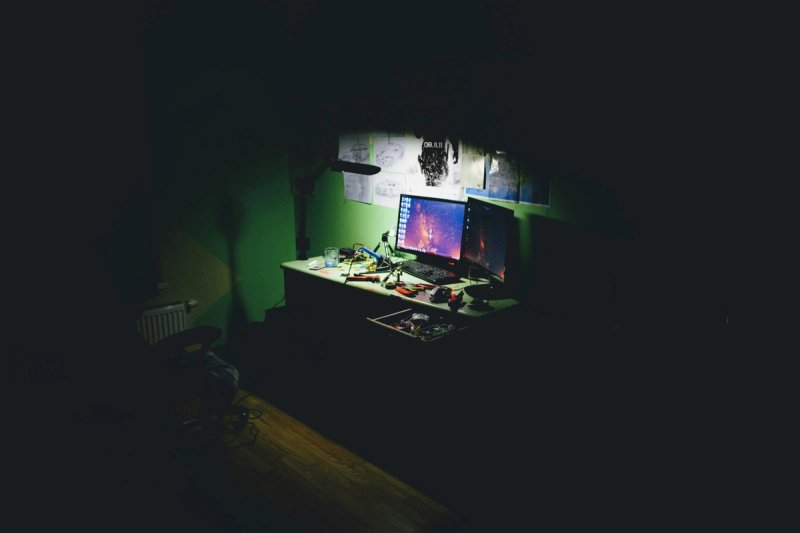
Glenn Carstens-Peters/Unsplash
Press play: Russia’s push to recruit through gaming
What can look like harmless entertainment is, for the Kremlin, a deliberate front for propaganda and mobilisation.
Disinformation & misinformation, explained.
Glenn Carstens-Peters/Unsplash
What can look like harmless entertainment is, for the Kremlin, a deliberate front for propaganda and mobilisation.

Subscribe to The Informer for monthly expert analysis, and to Events for advance notice of visiting world leaders and distinguished guests.
You may unsubscribe from Lowy Institute newsletters at any time. For information on our privacy practices and how to unsubscribe, see our Privacy Policy.
Press play: Russia’s push to recruit through gamingPress play: Russia’s push to recruit through gaming
In 2024, two young South Africans (Opens in new window) went to fight for the Russian Federation in Ukraine. How did they make the decision to trek halfway across the world to fight in a foreign war? They were recruited by Russian agents via online chats in Discord while playing the military simulation video game Arma3. One of the men subsequently died on the frontline.
In Ukraine itself, young people, some as young as 15, have been recruited as disposable agents to commit sabotage operations using gamified tactics.According to Ukrainian National Police figures, there have been over 600 cases (Opens in new window) of young people acting at the behest of Russian agents, starting with small tasks like photographing installations or posting material, with some escalating to bombing making or arson, for financial reward.
Beyond the battlefield, Russian intelligence and security agencies also target and recruit teens to conduct sabotage and terrorist operations in Europe via encrypted communications, social media, and gaming communication platforms. Among the cases was a Lithuanian teenager acting on behalf of Russian security services who was convicted of a terrorist attack after he planted an explosive device in an IKEA store in Vilnius (Opens in new window).
Recent research from the Institute for Strategic Dialogue (Opens in new window) demonstrated how Russian agents have targeted young people involved in a new form of violent extremism – nihilistic violent extremist (NVE) – a youth driven online ecosystem that glorifies violence and gore, that has been linked to terrorist plots, school shootings, child exploitation and other acts of violent crime and sabotage. Some of these linkages are being made on encrypted communications like Telegram, along with online multiplayer games and associated communication platforms.
These are but a few examples of Russia’s systematic sabotage operations against the West and influence operations across the world through targeted recruitment and propaganda dissemination via gaming platforms (Opens in new window) and encrypted communications. While the scale of Russia’s use of gaming platforms is not yet – and may never be – entirely clear, Russia views contemporary, online gaming spaces as contested information environments critical to their ongoing destabilisation and hybrid war efforts (Opens in new window).
As part ofthe Kremlin’s doctrine advancing digital sovereignty and separate internet infrastructure (Opens in new window) from the West, the Russian Video Game Trade Association (VIDO) announced a new strategy in June 2026. Beyond standard industry objectives, it is geared towards supporting the Kremlin-backed Internet Development Institute (IRI)’s aim of developing “deliberately misleading video games designed to promote malign Russian narratives” (Opens in new window) for which the IRI was sanctioned by the UK government in May 2026.
For example, the gaming experience African Dawn has been disseminated by the Russian state in Burkina Faso, where players are immersed in a world that portrays Russia as an anti-colonial champion in the region. The game is a modification for Hearts of Iron IV (Opens in new window)– a well-known strategy game – and part of a Russian propaganda campaign to increase popularity of its activities in West Africa and the Sahel. African Dawn has been integrated with influencer and media campaigns.
Gaming is an attractive domain for malign foreign actors like Russia, not only because it reaches a vast audience – made up of an estimated 3.7 billion people worldwide (Opens in new window) – but because it is an effective vehicle for influence operations (Opens in new window). Gaming networks are immersive and accessible spaces. Identities can be hidden and the largely unmoderated social and communications functions through adjacent platforms such as Discord and Steam can be exploited to spread propaganda, bypassing traditional media, and as vehicles to bond with, radicalise, and mobilise players.
Russia views contemporary, social gaming spaces as contested information environments critical to their ongoing destabilisation and hybrid war efforts.
The social bonds formed through gaming, from multiplayer teams in Fortnight or Call of Duty, are shaped faster than through legacy social media like Facebook. They are also more durable, with players exhibiting identity fusion (Opens in new window) (where the gamer identity becomes more important than any other aspect of their personhood) becoming more willing to fight and die for their fellow players (Opens in new window), and more likely to endorse violent or problematic beliefs. These powerful social ties can, in turn, be manipulated (Opens in new window).
These Russia-backed engagements clearly recognise the influential and contested nature of information among gaming communities. Research, including projects underway at the Royal United Services Institute (RUSI) on Russia, Hybrid Threats and Recruitment in Global Gaming Ecosystems (Opens in new window), will help us to better understand and contest these dynamics. For now, the presence of a national strategy on video gaming, coupled with the indicative case studies outlined above, points to substantive experimentation and exploitation across gaming platforms and communities by Russian state actors engaged in information manipulation and recruitment of young people for violence and sabotage.
About the author
Galen Lamphere-Englund
Galen Lamphere-Englund is a senior countering violent extremism researcher and practitioner, specialising in addressing online harms.
The most-pressing world events explained by Lowy Institute experts and global contributors, in your inbox, every Thursday.
You may unsubscribe from The Interpreter at any time. For information on our privacy practices and how to unsubscribe, see our Privacy Policy.


