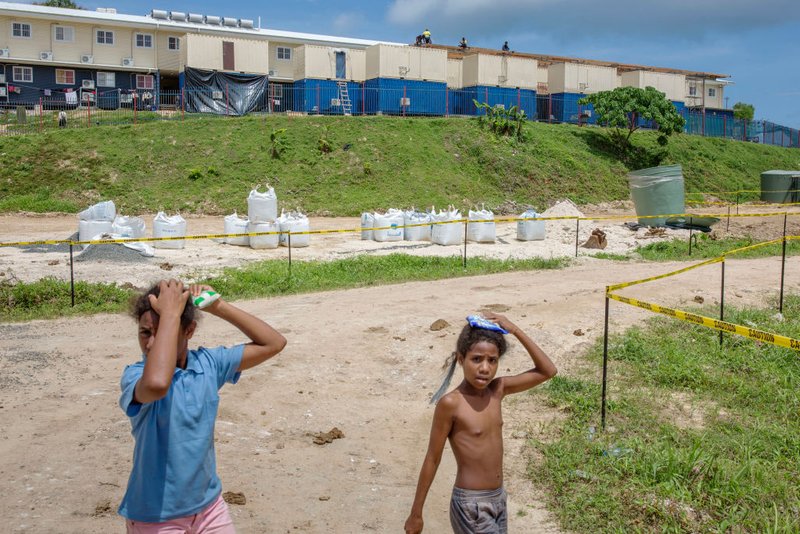
In fact, despite the quid pro quo nature of the secret provisions, at least some of the motivations behind the pledges by both governments seem to have been genuinely altruistic. Notwithstanding some earlier mixed messages, it now appears that Canberra’s commitment to take in more refugees from outside the Asia-Pacific region was indeed untied to a specific promise made to the United States and, as the Australian side had maintained, simply offered in goodwill at an Obama-hosted global migration summit. And for the United States’ part, an official that helped negotiate the deal later stated: “The impetus behind the US-Australia deal on our side was to get the people who were refugees off those islands, because my understanding was that conditions were bad.”
To date, even with the politically fraught nature of the question of migrants in the United States, over 500 refugees previously held in Nauru and Papua New Guinea have been resettled without much attention. This suggests that US agencies could continue to offer asylum to potentially hundreds more without sparking a backlash with either the public or the hardline anti-immigration factions within the administration.
Australia, for its part, seems similarly well positioned to welcome a sizable number of refugees from Central America. In fact, the United States believed Australia would do more on this front: after Canberra granted asylum in late 2017 to 30 people that had fled gang violence in El Salvador, there have been no additional reports of Central Americans being resettled in Australia.
In contrast to the United States, where this population has been maligned in certain influential sectors, there exists little fear mongering about Central Americans in Australia and therefore fewer political obstacles to the government accepting more. If anything, the newfound Australian fascination with Latin America and its culture – despite the tiny number of Latin Americans in the country – speaks to the degree to which they might find a welcoming home in Australia.
Moreover, beyond the political calculus of accepting more migrants and refugees, it is important to step back from the facile vision of such people as bundles of needs to be dealt with. Study after study has demonstrated the salutary economic effects that new arrivals have on their adopted countries, which is to say nothing of the social and cultural enrichment they bring.
Australia and the United States would do well to bear this in mind as they move forward, and go beyond the current minimalistic follow-through on their pledges. With the reelected Coalition government likely to maintain the detention and offshore processing policies for the foreseeable future, the United States should make good on taking in the remaining migrants it agreed to resettle, and welcome even more should they meet selection criteria. And with the United States’ uncompromising stance toward the Central American migrant crisis showing no signs of waning, Australia should do far more than resettle just 30 people from the region.
By more fully embracing their humanitarian commitments, Australia and the United States would be living up to promises to a key ally to help resolve thorny policy issues. In the process, they would strengthen the increasingly necessary bonds of collaboration on the ever more pressing challenge of global migration.
Alex Vedovi