Government & politics, explained.

A protest at the White House (Ian Hutchinson/Unsplash)
Democracies in glass houses
Even fascists claimed transparency as a virtue – visibility is not accountability, in any political system.
Government & politics, explained.
A protest at the White House (Ian Hutchinson/Unsplash)
Even fascists claimed transparency as a virtue – visibility is not accountability, in any political system.

Subscribe to The Informer for monthly expert analysis, and to Events for advance notice of visiting world leaders and distinguished guests.
You may unsubscribe from Lowy Institute newsletters at any time. For information on our privacy practices and how to unsubscribe, see our Privacy Policy.
Democracies in glass housesDemocracies in glass houses
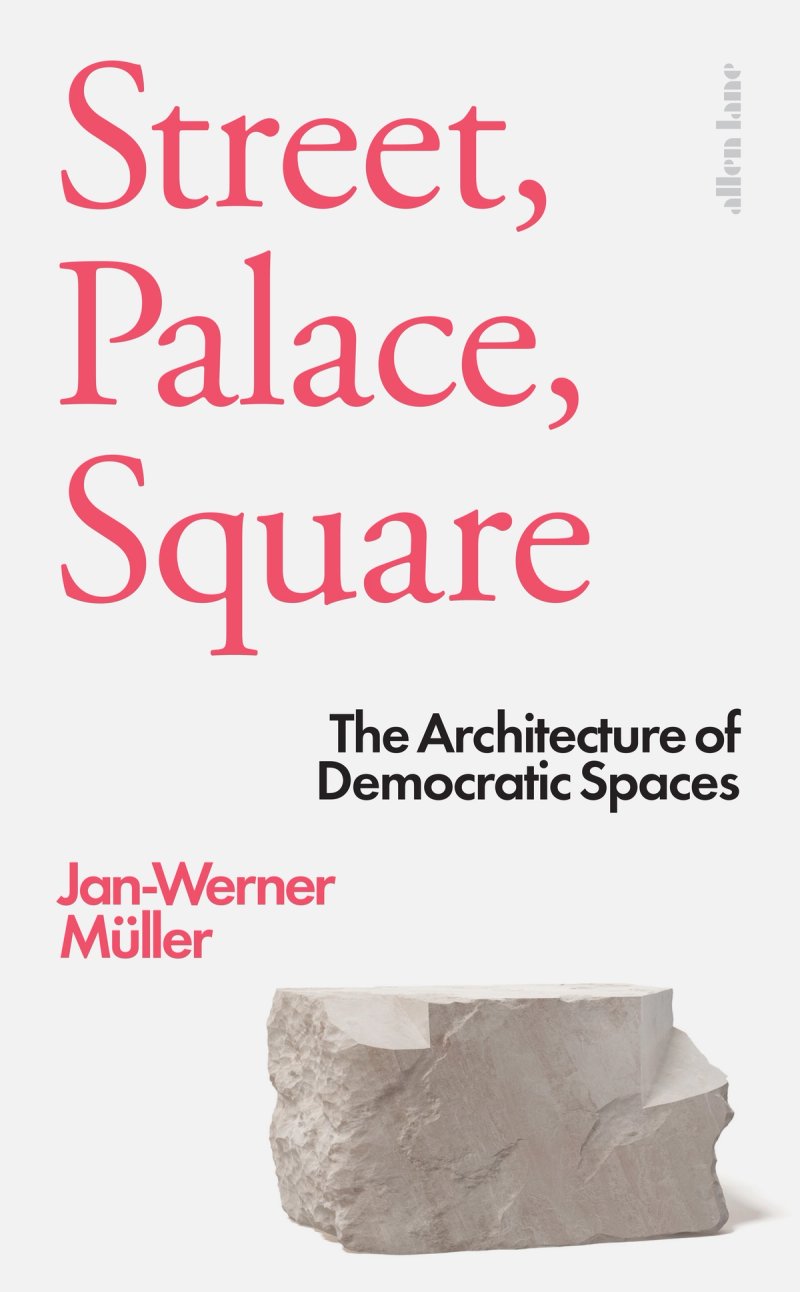
At the heart of Jan-Werner Müller’s thought-provoking new book (Opens in new window) on “the architecture of democratic spaces” sits a curious but remarkable citation from John Quincy Adams, the sixth President of the United States. Writing three years after his defeat to Andrew Jackson (and no doubt, as Müller points out, “disenchanted” by his experience of the democratic process), Adams mournfully reflected that democracy:
“has no forefathers, it looks to no posterity; it is swallowed up in the present, and thinks of nothing but itself. This is the vice of Democracy, and it is incurable. Democracy has no monuments. It strikes no medals. It bears the head of no man on a coin; its very essence is iconoclastic.”
Adams’ sentiment points to a set of inherent features of democracy that would seem to immunise it against self-celebration in stone and marble. Any democracy worthy of the name is modest, cautious, self-aware, and self-limiting. What is more, it is pluralist, resisting easy capture by any universal symbolism. And it is fluid – a conceptual shapeshifter, assuming vastly differing forms across time and space.
These factors, it would seem, prevent democracy from committing to the kinds of time-transcending physical representations embraced by, say, fascism, communism or absolutism.
Clearly, Adams was overstating the case: the capitals of democracies are packed with monuments that seem to summon universal political values. Democracy is evidently not incapable of representing itself. And history contains no shortage of conscious efforts to produce specifically democratic spaces and styles.
Still, there is a genuine problem at hand here: the self-reflexive quality that drives a sound democracy does indeed add some layers of complexity to how we read and approach its political spaces. But our ability to do so – and here we arrive at one of Müller’s critical points – depends first and foremost on recognising that comprehending the politics of space is not a simple exercise in reductive semiotics.
It is a central ambition of Street, Palace, Square to untangle some of the assumptions we carry about the relationship between politics and space. Politely but firmly, Müller destroys some longstanding idols. Whatever the aesthetic affinities of specific political systems, they reveal nothing inherent about those systems. A particular bugbear for Müller is “transparency” as a democratic aesthetic virtue. Not only is it the case that “visibility” hardly translates into “comprehension” (still less “accountability”), it is also far from the exclusive province of democracies: witness the boast of the Italian architect Giuseppe Terragni that his Casa del Fascio manifested the “Mussolinian concept that fascism is a glass house into which everyone can peer”. Glance away from the big prestige projects, and the old stereotypes about political aesthetics tend to break down very quickly. Whatever the political order, space and aesthetics are always in a state of flux. They are permanent sites of challenge, contest, and negotiation – and not only in democracies.

Casa del Fascio di Como, former seat of the local branch of the National Fascist Party, architect Giuseppe Terragni 1904–43 (Wikimedia Commons)
This all might sound rather abstract and airy. But Street, Palace, Square is not that kind of work at all. Rather, Müller’s is a strikingly easy book to read and digest, wearing its theory lightly and moving briskly but adeptly between case studies drawn from across the world. It is not, however, the kind of study that offers simplistic or all-embracing panaceas. Müller is more concerned with posing problems than offering conclusions. Indeed, the immediate virtues of the book consist in the clarity with which its problems are posed and the extent of the geographical and historical expanses it so effortlessly traverses.
Above all, though, Street, Palace, Square serves as a forceful corrective to our tendency to ignore the power of space and the space of power. Emotions and aesthetics have often occupied an uneasy place within political analyses. They can easily assume the character of something fleeting and unserious, as surface phenomena floating far above the real motors of political action. Or, as in the cases of fascism and communism, they can all too readily be explained away as very simple expressions of a very simple vision of power.
By contrast, a political order like democracy – varied through history and geography, and marked out by multidirectional flows of power – lacks the conceptual straightforwardness on which, it is often assumed, political iconography depends. This, Street, Palace, Square reminds us, is a mistaken assumption.
At the same time, Müller invites us to understand that space is a domain not only within which politics unfolds but one that shapes the character of that politics as well. “Different urban forms”, he writes, “facilitate different kinds of political conduct” (note the verb: facilitate, not determine).It matters whether the space in question is a building, a square, a boulevard or a street. It matters, too, that the politics of space is a politics concerned with physicality and presence. Surveillance states and digital cultures may have thoroughly reconfigured the relationship between state, society and individual, but they have not lessened – still less negated – the significance of physical space as a venue of political action and activity. Müller’s short but informed and nuanced study encourages us to think through the implications of this essential but often overlooked fact.
Jan-Werner Müller’s Street, Palace, Square: The Architecture of Democratic Spaces is published by Allen Lane (2026).
About the author
Marcus Colla
Marcus Colla is Associate Professor of Modern European Political History at the University of Bergen, Norway.
Topics
The most-pressing world events explained by Lowy Institute experts and global contributors, in your inbox, every Thursday.
You may unsubscribe from The Interpreter at any time. For information on our privacy practices and how to unsubscribe, see our Privacy Policy.