Subscribe to The Informer for monthly expert analysis, and to Events for advance notice of visiting world leaders and distinguished guests.
You may unsubscribe from Lowy Institute newsletters at any time. For information on our privacy practices and how to unsubscribe, see our Privacy Policy.
More than 1.2 million Rohingya refugees remain in overcrowded camps in Cox's Bazar, Bangladesh (Mallika Panorat/EU Civil Protection and Humanitarian Aid)
ICJ genocide ruling: what now for over 1 million Rohingya survivors in exile?
A genocide ruling against Myanmar leaves the harder work still ahead: safe, dignified return for the displaced.
Subscribe to
The most-pressing world events explained by Lowy Institute experts and global contributors, in your inbox, every Thursday.
You may unsubscribe from The Interpreter at any time. For information on our privacy practices and how to unsubscribe, see our Privacy Policy.
|ICJ genocide ruling: what now for over 1 million Rohingya survivors in exile?
ICJ genocide ruling: what now for over 1 million Rohingya survivors in exile?
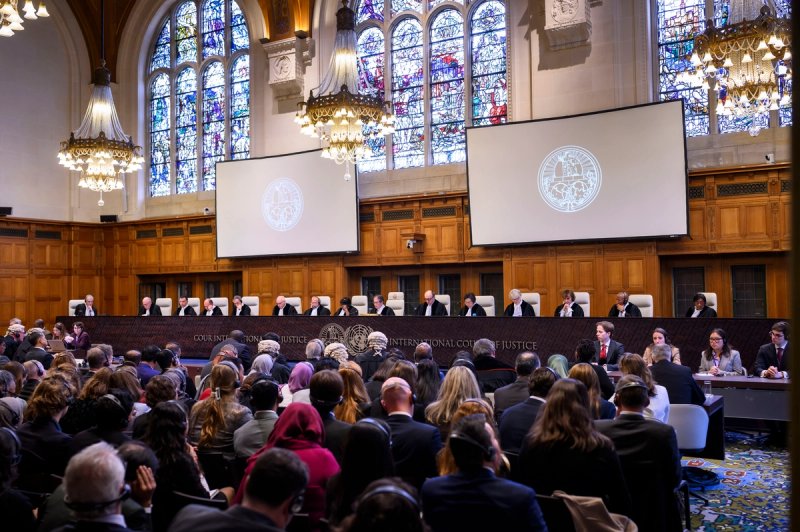
19 November 2026 will stand in history as a landmark day for justice. The International Court of Justice (ICJ) delivered its judgement in The Gambia v. Myanmar finding Myanmar responsible for genocide against the Rohingya.
This is the first time a state has been found responsible for genocide (Opens in new window) in the Court’s 80-year history, reinforcing the role of international law at a time of regressive global power plays. The Court affirmed legal recognition of the Rohingya as a protected ethnic group with their own culture, language and land, rejecting Myanmar’s claim they are immigrants to deny citizenship. While the judgement establishes state responsibility, it does not address the criminal liability of individual perpetrators.
In late 2017, more than 700,000 Rohingya fled (Opens in new window) into neighbouring Bangladesh where the majority remain in camps today. Nearly 10,000 Rohingya were killed in targeted attacks that included executions of men and boys, widespread sexual violence, killing of children and destruction of villages. More than 1.2 million Rohingya now live in Bangladesh, with fewer numbers in Malaysia, Indonesia, Thailand and Saudi Arabia.
The Gambia chose to stand with one of the world’s most persecuted people and with political and financial backing from the Organisation of Islamic Cooperation (OIC) helped secure this victory for victims and survivors of genocide.
The Court has reinforced a founding principle of international justice – those subjected to genocide are entitled not only to recognition of harm, but to meaningful redress.
The decision relied heavily on factual evidence, including survivor testimony and the findings from the Independent Fact-Finding Mission on Myanmar and the Independent Investigative Mechanism for Myanmar (IIMM). Extensive evidence was presented of the systematic destruction and atrocities committed during the military “clearance operations” in northern Rakhine State.
Several groups were instrumental in supporting survivors, documenting abuses, and facilitating participation in accountability processes – from Rohingya human rights defenders, Bangladeshi women’s rights organisations such as Naripokkho, community organisations in Cox’s Bazar and Legal Action Worldwide. Together their work formed an important part of the evidence considered by the Court and other accountability mechanisms.
Myanmar argued it was carrying out counter-insurgency operations. The Court rejected this, determining multiple motives can co-exist, and that on the totality of evidence, genocidal intent was the only reasonable inference. The Court paid particular attention to the sexual violence and harm against children in reaching these findings. Survivors of rape as a weapon of war and genocide provided evidence in the proceedings. This showed sexual violence was carried out by security forces against Rohingya women and girls in the lead-up to, during and after 25 August 2017, including patterns of gang rape and torture (Opens in new window).
The Court further recognised the central role of forced displacement in the Rohingya genocide. As part of its reparation order, it requires Myanmar to enable the safe, voluntary and dignified return of the Rohingya, and family reunification. The Court affirmed survivors’ rights to reparations, restitution, and guarantees of non-repetition. In doing so, the Court has reinforced a founding principle of international justice – those subjected to genocide are entitled not only to recognition of harm, but to meaningful redress. The implications resonate far beyond the Rohingya case.
Several states responding to genocide cases before the ICJ will be watching closely, including Israel, Russia, Germany and Rwanda. Perhaps the most critical finding from the decision is that a counter-insurgent operation can be carried out with genocidal intent, through a pattern of violence, displacement and destruction, without an explicit order to commit genocide.
The decision turned on factual evidence, that in part explains the court reaching its decision by 9 to 6. There are parallels between the Rohingya and Gaza cases, but there will be differences, including five new judges that will decide the case.
Reading of the judgement in the case The Gambia v. Myanmar (ICJ)
Rohingya representatives have welcomed international recognition of what was done to them.
For Rohingya in Bangladesh and those at risk of forced returns in Malaysia, the ruling provides truth and justice, but daily survival has become harder with cuts to food rations, and safe durable returns remaining unlikely.
Lessons from Rwanda and the former Yugoslavia show that legal accountability without medical, psychological and economic support for survivors is insufficient. Children born of rape require ongoing support due to the risk of stigma and marginalisation.
The Genocide Convention includes duties for third states to prevent genocide, with the court clarifying a state can breach this duty without a determination of genocide.
Bangladesh, which contributed to the OIC fund supporting the case, has been at the forefront of advocacy for Rohingya victims and survivors over the past nine years. It welcomed the decision while noting the practical challenges of securing reparations. Calls for return cannot override the requirement to ensure any future repatriation is safe, voluntary, dignified, and consistent with international law.
The United Kingdom has expelled Myanmar’s defence attaché, issued new sanctions and declared it will call a UN Security Council meeting to enforce the decision. Australia joined a 14-nation joint statement (Opens in new window) recognising the decision as legally binding on Myanmar, but announced no new commitments.
The ICJ has set a precedent. It should be celebrated and responded to with timely action as urged by Rohingya advocates. The responsibilities of other states, including Australia, must be to continue to exert pressure on Myanmar and maintain support to the Rohingya survivors until safe, durable returns can be guaranteed.
Bina D’Costa is Professor of International Relations at the Australian National University. She served on UNICEF's first emergency response team in Cox's Bazar in 2017 and subsequently provided expert evidence to the Independent Investigative Mechanism for Myanmar (IIMM).
Amra Lee is a practitioner-researcher completing a PhD on protecting civilians at risk in a changing world order at the Australian National University.