|Penny Wong and the unlamented death of the foreign policy White Paper
Penny Wong and the unlamented death of the foreign policy White Paper
Foreign Minister Penny Wong has done future governments and Australia’s international partners an enormous favour. Her “White Paper-lite” speech in parliament (Opens in new window) this week is a case where the process is just as important as the substance.
A speech amounts to a far more effective means of delivering a message about the direction for Australia’s foreign policy than the outmoded practice of producing a cumbersome bureaucratic booklet. The location for delivery also puts on show the country’s democratic foundation.
The magic isn’t in the timing. Whether delivered once a year or more regularly, a speech of this type helps Australians and the rest of the world more readily understand where the government stands on the big global issues of the day. The content can be shorter, sharper and easily updated the next time Wong – or her successors – stand at a podium.
Australia has a habit of debating long horizons without accountability for the here and now.
The first Foreign Policy White Paper (Opens in new window) was issued almost 30 years ago under Alexander Downer. It ran to nearly 100 pages with the aim to look ahead for the next 15 years, but the content was quickly overtaken by events. The 1997 Asian economic crisis mugged rosy assumptions about the trajectory of regional prosperity. It was a ponderous exercise treated almost as an atlas, with every foreign government looking for mention of their country and ranking of importance.
Six years later came the 2003 White Paper (Opens in new window) – just about twice the length, and largely a crude justification for the coming invasion of Iraq, which commenced a month after the release.
The 2017 edition (Opens in new window) landed with a thud in the first Trump presidency and a year after Brexit. In the decade of disruption since, I doubt any well-meaning official has pulled a copy off the shelf as a guide for what Australia should expect.
Each of those White Papers fell under a Coalition government and was produced by the Department of Foreign Affairs and Trade. Labor’s only attempt was run through the Prime Minister’s department, the 2012 “Australia in the Asian Century (Opens in new window)” white paper. This 320-page opus had already been culled (Opens in new window) during drafting and leadership tensions between Julia Gillard and Kevin Rudd.
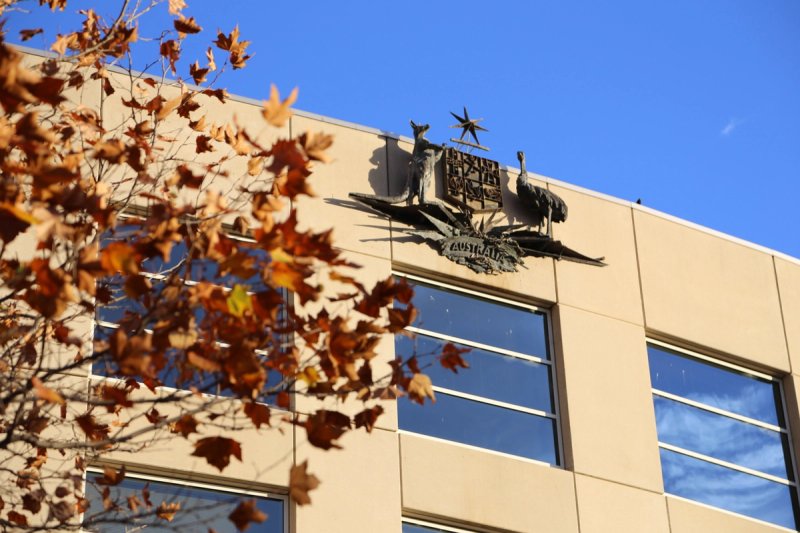
The R. G. Casey building in Canberra, headquarters for the Department of Foreign Affairs and Trade (Nathan Fulton/DFAT)
Wong pointed to the problem with any White Paper process during parliamentary hearings earlier this year when asked if there was any plan to update the 2017 document. “We don’t see it as an academic exercise and an exercise on which we’re going to ask the bureaucracy to do hundreds of hours of work,” Wong said (Opens in new window). “Events have moved beyond where the white paper was very quickly.”
Allan Gyngell, veteran diplomat and founding executive director of the Lowy Institute, also favoured using speeches to deliver a government’s message. Gyngell was also the official brought in to revise (Opens in new window) the Asian Century white paper and was an influence on Wong’s thinking (Opens in new window). White Papers had been a Defence department long-term planning exercise to justify major acquisitions. Foreign policy could be more agile and didn’t rest on the same constraints. And Defence has since abandoned White Papers in favour of a regular and streamlined process of issuing a National Defence Strategy (Opens in new window).
Some headline judgements in those earlier white papers hold up well. The 1997 paper was prescient about China’s rise, for example, arguing “China’s economic growth, with attendant confidence and enhanced influence, will be the most important strategic development of the next 15 years”. But insight can be selective. That same paper made just one mention of terrorism, which had a profound influence over the following decade.
Australia has a habit of debating long horizons without accountability for the here and now. White Papers eat a lot of time compared to their value. The crystal ball can be consulted just as effectively through internal deliberations such as intelligence assessments, which can then inform a minister’s public statements. Even dressed up for presentation in a pamphlet (Opens in new window) with a handful of photos and illustrative graphics, Wong’s speech lands at a tight 40 pages. Keep nailing the coffin closed, Penny.
Daniel Flitton is one of Australia’s most experienced foreign affairs journalists and is Managing Editor of the Lowy Institute’s international magazine, The Interpreter.