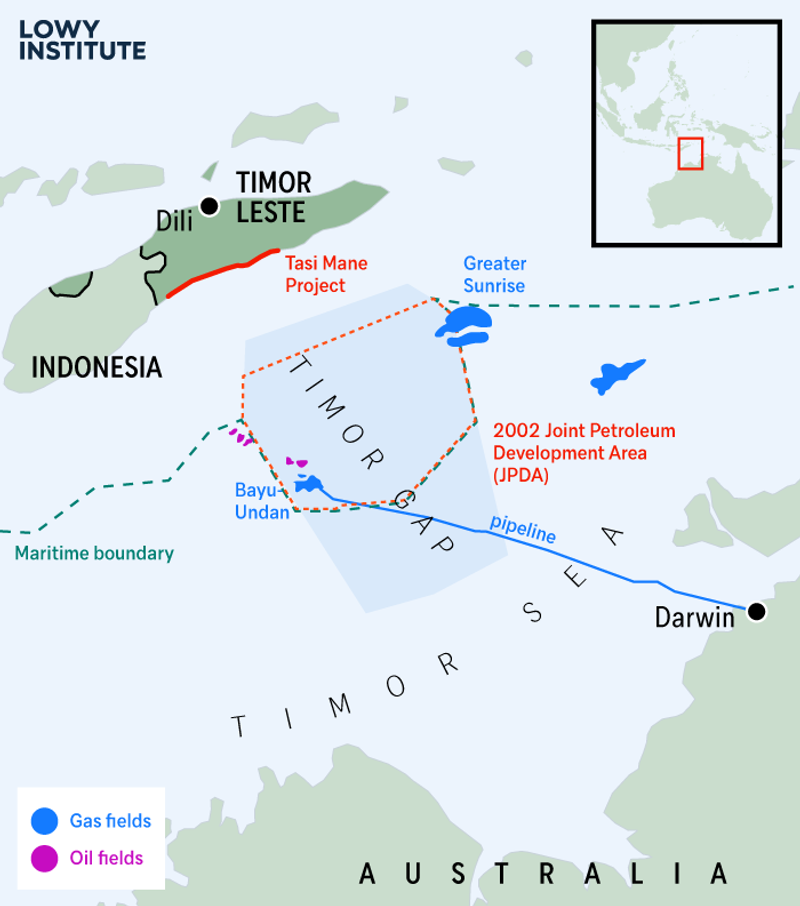
It may be that the gap between Woodside’s commercial priorities and Timor-Leste’s South Coast ambitions may have proved too wide. Analysts have been warning that the commercial elements (Opens in new window) of Timor-Leste’s plan do not stack up for at least a decade.
But how will Timor-Leste finance Greater Sunrise and its South Coast vision of establishing a pipeline, LNG plant and related infrastructure intended to create jobs and support economic development?
According to Timor GAP President and CEO Rui Soares, Woodside’s exit puts (Opens in new window) Timor-Leste “in a stronger position than ever to expedite the development of Greater Sunrise”.
A number of other questions also remain.
The deal offers Timor-Leste greater autonomy over the project’s direction, but it also leaves the country responsible for finding partners and capital to invest into its development plan. The stakes are high. The International Monetary Fund has warned that, under current policies and without further reforms, Timor-Leste’s Petroleum Fund could be depleted in the late 2030s. Ramos-Horta has previously described the prospect of failing to develop Greater Sunrise as a “financial cliff”.
The headline price looks low: on a simple percentage comparison, Shell and ConocoPhillips’ 2018–19 sales imply roughly US$378–391 million for Woodside’s 33.44% stake. But most of Woodside’s maximum US$200 million payment is conditional on the project reaching production.
By offloading its stake, Woodside can redirect capital and management attention to projects it sees as less politically challenging, while Timor-Leste is now free to pursue development in the way it wants.
Ramos-Horta said in 2022 that Timor-Leste would be “very interested (Opens in new window)” in Chinese financing, and in 2024 said the government had spoken with Chinese firms, including state-owned Sinopec (Opens in new window), about the project. Whether China would invest remains uncertain. Teesta Prakash and Jack Sato have argued on The Interpreter that Beijing is “unlikely (Opens in new window)” to finance Greater Sunrise, though Chinese state-owned companies have commercial interests in Timor-Leste, including infrastructure projects.