Taipei says it is still talking to Kuala Lumpur and hopes Malaysia will recognise the close investment ties and long-standing trust between them (Mohd Rasfan/AFP via Getty Images)
Malaysia-Taiwan: Anwar’s China line triggers a quiet investment freeze
But Taiwan’s own firms limit how hard it can press Malaysia.
Newsletters
Subscribe to The Informer for monthly expert analysis, and to Events for advance notice of visiting world leaders and distinguished guests.
You may unsubscribe from Lowy Institute newsletters at any time. For information on our privacy practices and how to unsubscribe, see our Privacy Policy.
|Malaysia-Taiwan: Anwar’s China line triggers a quiet investment freeze
Malaysia-Taiwan: Anwar’s China line triggers a quiet investment freeze
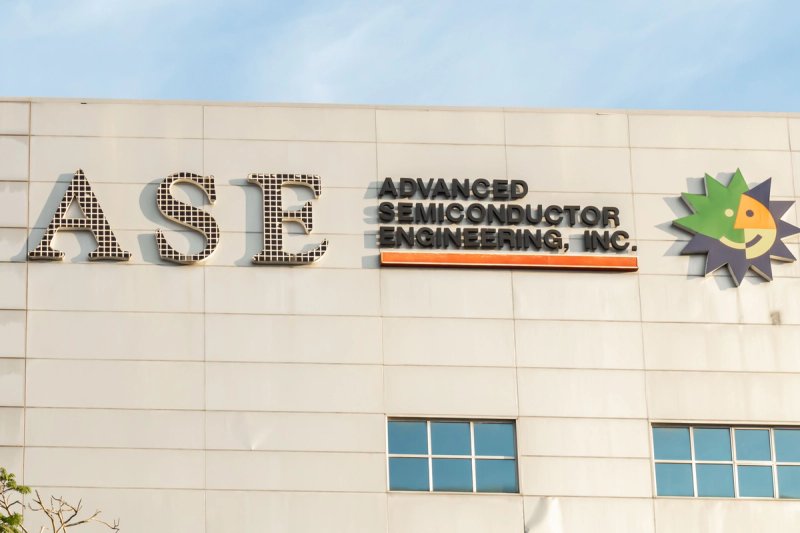
Taiwanese technology company Advanced Semiconductor Engineering has extended its operations to Malaysia in recent years, one of a number (Opens in new window) of Taiwanese firms setting up a presence in the Southeast Asian nation. This is the same Malaysia whose Prime Minister Anwar Ibrahim told Al Jazeera in August that he saw Taiwan “as part of China, period”.
On 10 November, Taiwan’s foreign ministry spokesman Hsiao Kuang-wei confirmed (Opens in new window) that Taipei had paused investment talks with Malaysia to safeguard “national sovereignty, economic security and the rights of Taiwanese investors”. Two days later Anwar told parliament t (Opens in new window)hat a meeting of the bilateral Economic Cooperation Committee, due in October, had been postponed, and that Putrajaya had reached out to resume it.
Back in August, after Anwar’s initial comments, I argued in (Opens in new window)The Interpreter (Opens in new window) that Southeast Asian governments treat their statements on Taiwan as passing remarks, while Beijing files them in a cumulative record. The freeze between Taiwan and Malaysia shows that Beijing is no longer the only one keeping score. It also tests a narrower judgement in that piece: that Taiwanese investors, present in Malaysia for cost and tariff reasons, would not be moved by a television interview.
Taipei’s move follows a pattern set in September 2025, when its economics ministry announced export controls on 47 chip-related products bound for South Africa, over the downgrading of Taiwan’s office, and suspended the plan two days later (Opens in new window)when Pretoria agreed to talk. In March Taipei relabelled South Korean nationals on residence cards in a dispute over Seoul listing Taiwan as “China (Taiwan)”. It threatened a second step, shelved it once (Opens in new window) Seoul moved to fix its e-arrival system, and kept the first (Opens in new window).
Each measure was graduated and left room for a settlement. The Malaysian one is built the same way, and more quietly. The decision dated from October and surfaced only when Nikkei Asia (Opens in new window) reported it on 9 November. Taipei set no deadline, says it is still talking to Kuala Lumpur, and hopes Malaysia will recognise (Opens in new window)the close investment ties and long-standing trust between them. What it appears to want is a gesture addressed to Taipei itself.
Taiwan’s weight in Malaysia is the weight of its firms.
Anwar’s answer in parliament offered the resumption of talks and little else. Malaysia, he said (Opens in new window), “cannot compromise” on One China. He denied having endorsed an attack on Taiwan and repeated his preference for a peaceful resolution, while describing any Chinese decision to use force as a domestic matter in which Malaysia would not interfere. His government separates diplomatic recognition from economic engagement. Taipei’s freeze refuses that separation: it makes the economic channel conditional on the political language.
Whether Taipei returns to the table without a gesture will show how far its leverage reaches. So far the cost to Malaysia has been small, to judge by the figures Anwar gave parliament: bilateral trade of RM254.21 billion in the first nine months of the year, with exports to Taiwan up 88%, and no sign, he said, of investors withdrawing.
The sharper cost is domestic: opposition leader Hamzah Zainudin (Opens in new window) asked why the prime minister had to “rock the boat”, and urged caution with the country’s fourth-largest trading partner.
ASE manufacturing facility, provider of semiconductor manufacturing services in electronics, Penang, Malaysia (Universal Images Group via Getty Images)
The limits of Taipei’s gesture lie in the structure of the relationship. Taiwan’s weight in Malaysia is the weight of its firms, and those firms run production networks through Penang: according to the state’s assembly speaker (Opens in new window), many Taiwan-made wafers go there for packaging and testing before export to the United States. A government whose main asset abroad is its companies’ capital cannot squeeze the host economy without squeezing them first. Taipei has met this limit before: after the South African controls, Bloomberg reported (Opens in new window)second thoughts among officials, possibly over the impact on firms such as TSMC.
The August judgement on investors holds for existing plants and was too sanguine about new ones. Lin Kai-min (Opens in new window) of the Taiwan Chamber of Commerce in Malaysia says current operations have barely been affected, but investors are warier of new commitments, and firms with American and European customers may rethink where they place future or sensitive capacity. That warning locates the pressure in the requirements of buyers in the United States and Europe, who sit above both Taipei and Kuala Lumpur in the chain and answer to neither.
ASEAN leaders are meeting in Manila this week, and APEC leaders gather in Shenzhen on 18 and 19 November, where Taipei has already received an emailed invitation rather (Opens in new window) than the customary envoy. ASEAN still has no common line on Taiwan and no shared record of what each member has conceded, so each government will weigh Beijing’s ledger and Taipei’s on its own. The April 2025 joint statement with China committed Malaysia on Taiwan with no mention of peaceful means. Whatever Kuala Lumpur signs with Beijing around the Shenzhen summit will show whether the peaceful resolution Anwar invoked in parliament reaches the written text. Taipei, with no date set for the committee, will be reading it as well.
Aniello Iannone is a Lecturer in International Relations and International Political Economy at President University, Indonesia, where he also serves as Secretary General of the ASEAN Studies Centre.