A Chinese Coast Guard vessel’s crew film a Philippine supply boat near Second Thomas Shoal in the South China Sea, 5 March 2024 – one of regular confrontations between the two countries’ vessels in the area (Ezra Acayan/Getty Images)
US–China strategic stability doesn’t reach the water
Renewed military dialogue is a step forward, but the channels do not yet reach the coast guards and allies where maritime incidents are most likely.
Newsletters
Subscribe to The Informer for monthly expert analysis, and to Events for advance notice of visiting world leaders and distinguished guests.
You may unsubscribe from Lowy Institute newsletters at any time. For information on our privacy practices and how to unsubscribe, see our Privacy Policy.
These facts are not a contradiction. The framework never promised to freeze military competition, and judged against its actual commitments it is making modest progress. The problem is narrower and more serious: the channels that exist do not fit together where dangerous encounters can occur. Whatever the intent, the effect is that bilateral calm and regional pressure coexist.
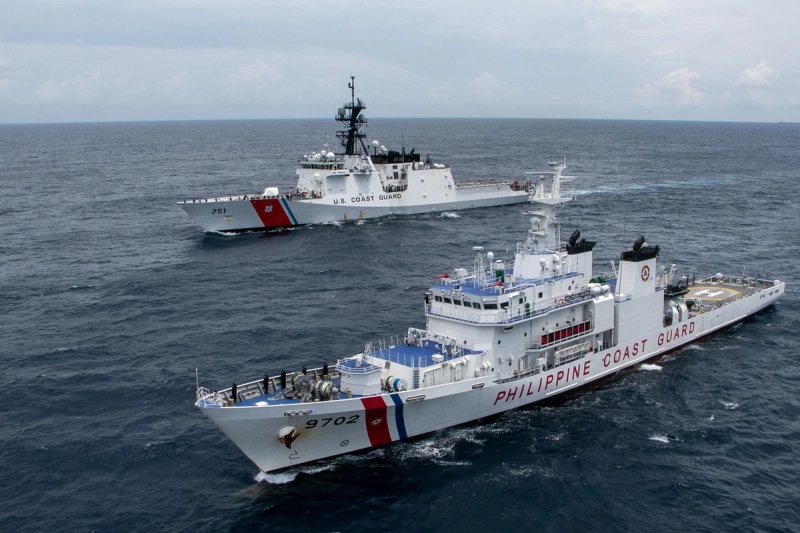
A 2024 exercise between the US Coast Guard and Philippine Coast Guard (Elijah Murphy/DVIDS)
Regional channels do exist. Japan and China opened a defence hotline in 2023 (Opens in new window), and Manila and Beijing agreed in 2024 (Opens in new window) to improve maritime communications, including a future coast guard link. In August, The Interpreter reported that the Japan–China hotline had barely been used (Opens in new window) since its first call in May 2023. Manila said in March that amendments to its coast guard agreement were under discussion (Opens in new window). The gap is not an absence of channels but their coverage, reliability and coordination. A US–China memorandum alone cannot establish procedures for Chinese coast guard captains and Philippine or Japanese commanders when their ships meet.
The second is implementation. Nuclear risk offers another test. US and Chinese officials met at least three times this year (Opens in new window) on the margins of the five nuclear powers’ dialogue, with Washington seeking more advance notice of missile tests. The reported meetings establish engagement, but not a shared launch-notification procedure.
Two indicators deserve attention. The first is operational: whether both governments agree on the memorandum’s purpose and scope, sign it, and use its procedures when an interception goes wrong. The second is whether the PLA’s November–December peak drill season (Opens in new window) passes without a large exercise around Taiwan. Neither would prove the framework caused restraint, but together they would suggest stability is becoming practice rather than language.
The region should also look beyond the bilateral line. Incidents involving coast guards and allies can also escalate. Extending rules for unplanned encounters to coast guards, and linking allied, regional and US–China channels, would do more for stability than another summit communiqué. Without that, the formula will have stabilised the conversation, not the competition. High-level stabilisation will remain incomplete where maritime incidents are most likely to occur.
Dr Sophie Wushuang Yi is a Postdoctoral Teaching Fellow at Schwarzman College, Tsinghua University. She is also a Non-Resident Research Fellow at the Grandview Institution in Beijing and the Wang Gungwu Visiting Fellow at the ISEAS – Yusof Ishak Institute in Singapore.