The third issue may be of greatest interest: the opportunities opened by digital currencies. The starting point is the stunning popularity of cryptocurrencies. Could these replace not just the dollar, but all national currencies, and if so, what are the consequences?
The success of Bitcoin came as a great surprise to most economists (including me). But whatever its advantages for drug purchases and other illicit transactions, money laundering, cyber ransoms, and sanctions avoidance, none of the Bitcoin-like cybercurrencies can meet the three-fold requirements of a proper currency: providing efficient payments services, a safe savings instrument and an accounting numéraire.
Thus, the possible rivals to the dollar are “stable-coins” – digital currencies with a fixed value against the dollar. The greatest threat was from Meta’s Libra proposal. The United States was not ready to see this key policy instrument taken over by a private company and so killed the initiative.
But a digital instrument opens the possibilities of better, more useful currency, perhaps with in-built conditionality (for example, payment made only when specified conditions were met). Could, or should, such developments be held back?
Perhaps central banks ought to be the ones to provide it. The Bank for International Settlements (the central bankers’ club), previously unenthusiastic about central banks issuing a digital currency to the general public, now advocates and promotes CBDCs – central bank digital currencies.
In fact, almost all central banks already have a digital version of their currency, just as almost all bank deposits and payments systems are digital. But its use is restricted to key players in the payments system – mainly banks.
But existing payments systems are already pretty good. Many central bankers still ask if a CBDC is a solution in search of a problem.
Meanwhile, the international use of the dollar has required constant adaptation. Can (and should) the US Federal Reserve go on bailing out various participants in the dollar market, as happened in 2008 and again at the start of the Covid pandemic, to retain its position as the overwhelmingly preeminent global financial market?
And if floating rates have worked for the United States, what about for the rest of the world? International financial markets are linked through capital flows. This means others must adapt to American monetary policy. If we want to have an interest rate much different from the Fed’s policy setting, we will have to accept a counter-balancing distortion of our exchange rate, which may not suit our domestic economy.
These free international capital flows are an integral part of the Wall Street worldview. They have often proved volatile, with sudden reversals causing the exchange-rate crises in Latin America in the 1980s, Mexico in 1994, and Asia in 1997. Emerging countries have accumulated substantial foreign exchange reserves to smooth these fluctuations, but this is a low-return use of their scarce savings.
When these countries borrow in dollars on international capital markets, they are vulnerable to the swings in dollar exchange rate, which can make their debt unsustainable.
Blustein, a veteran reporter and author of a series of books covering international economics, writes clearly and vividly on important issues that many might find esoteric, perhaps boring. If you are still unconvinced about the dollar remaining king, read this.
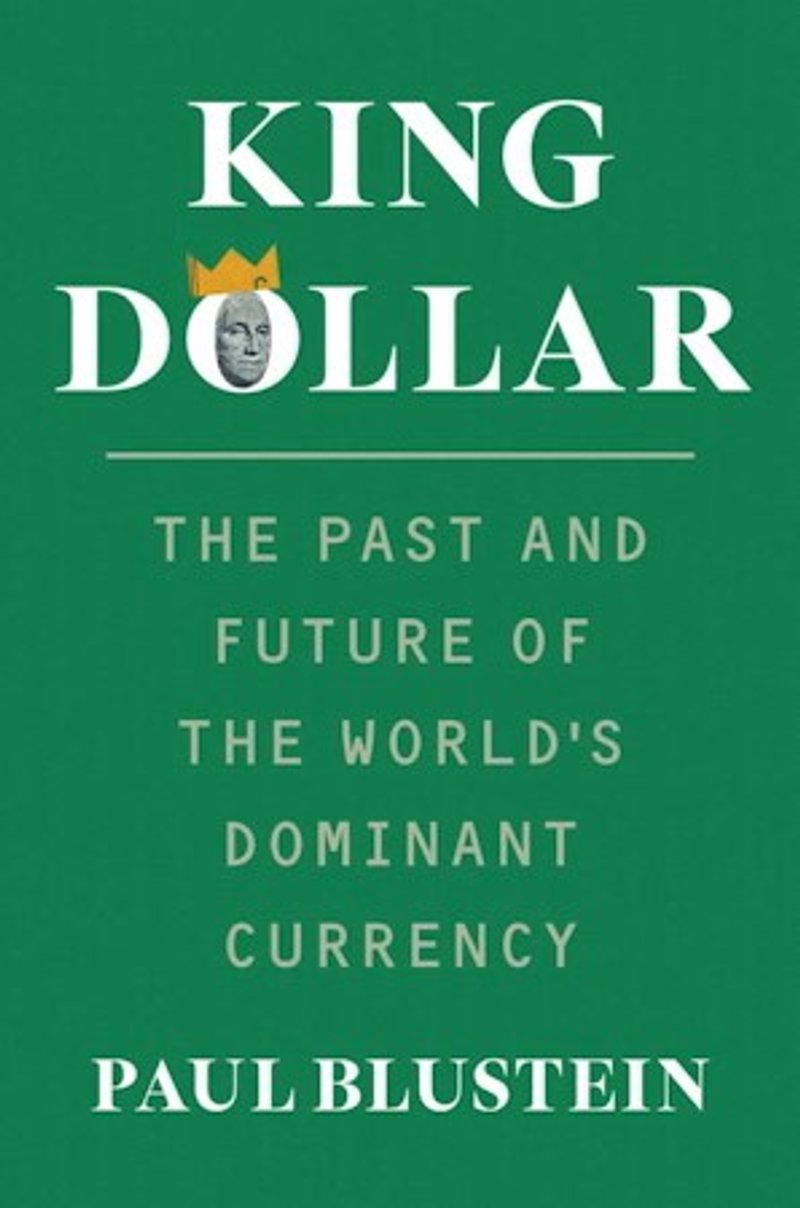
Paul Blustein, King Dollar. The Past and Future of the World’s Dominant Currency (Yale University Press 2025)