
Energy & resources, explained.

Getty Images Plus
The yttrium squeeze: How a little-known rare earth became China’s latest geopolitical lever
A 98% collapse in sales to one buyer highlights how industrial system power can translate into influence.
Energy & resources, explained.
Getty Images Plus
A 98% collapse in sales to one buyer highlights how industrial system power can translate into influence.

Subscribe to The Informer for monthly expert analysis, and to Events for advance notice of visiting world leaders and distinguished guests.
You may unsubscribe from Lowy Institute newsletters at any time. For information on our privacy practices and how to unsubscribe, see our Privacy Policy.
The yttrium squeeze: How a little-known rare earth became China’s latest geopolitical leverThe yttrium squeeze: How a little-known rare earth became China’s latest geopolitical lever
A kilogram of yttrium oxide (Y2O3) costs around US$9 in China but roughly US$1,150 in Europe – more than 125 times as much. Before Beijing tightened rare earth export controls (Opens in new window), the price gap was modest. Now, Japan is bearing the brunt of the supply squeeze. Yttrium is used in high-tech manufacturing across electronics and lasers as well as cancer treatments.
Tokyo has portrayed the price disparity as a global problem. Officials at Japan’s Ministry of Economy, Trade and Industry (METI) have said China’s yttrium exports have stalled, driving global prices higher.
But the trade figures tell a more pointed story. In the first nine months of 2026, China’s yttrium oxide exports to Japan reportedly plunged 98% (Opens in new window), from 887 tonnes to just 18 tonnes. China’s global exports fell by only 26%, while shipments to destinations other than Japan more than doubled. The disparity suggests selective supply restrictions.
Japanese manufacturers are scrambling for alternative supplies. Tokyo (Opens in new window) has also sought help from Washington and other allies over yttrium shortages.
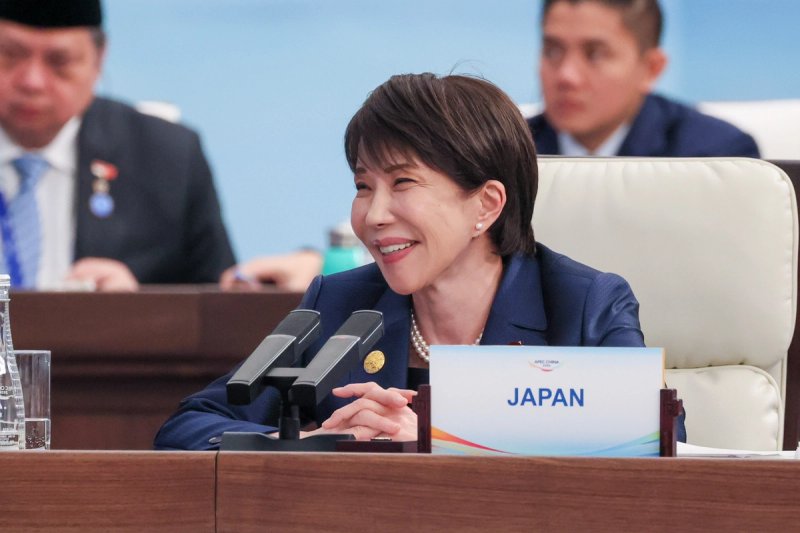
The timing matters. China introduced export licensing for several medium and heavy rare earths, including yttrium, in April 2025. But tensions escalated after Prime Minister Sanae Takaichi suggested in November 2025 that a Chinese blockade of Taiwan involving military force could constitute a survival-threatening situation – a legal threshold permitting collective self-defence under certain conditions.
Beijing regarded the remarks as crossing a red line. Yttrium shipments to Japan reportedly dwindled from December, before China restricted dual-use exports (Opens in new window) to Japanese military users and military-related end uses in January 2026. In February, Beijing prohibited exports to 20 Japanese entities (Opens in new window) and placed another 20 under heightened scrutiny.
A little-known rare earth has become an unlikely source of geopolitical leverage.
Although relatively light in atomic weight, yttrium is commercially grouped with the heavy rare earths. Unlike neodymium and dysprosium, used in high-performance permanent magnets, yttrium’s value lies in advanced ceramics and specialised coatings. Yttrium-stabilised zirconia protects jet-engine components from extreme heat, while yttrium-based compounds shield semiconductor equipment from corrosive plasma. It is also used in lasers, optical materials and medical devices.
Manufacturers need relatively small quantities, but shortages can disrupt production of equipment worth millions of dollars. Qualifying alternative materials for aerospace and semiconductor applications can take years.
Yttrium is generally recovered alongside other rare earths (Opens in new window), rather than mined independently. Deposits exist outside China, including in Australia, but separating and refining them requires specialised expertise and processing capacity. China has spent decades developing these capabilities through integrated supply chains and economies of scale.
Japan excels in advanced materials and precision manufacturing, but remains heavily dependent on China for upstream rare earth processing, which carries consequences in downstream production. China also relies on Japanese manufacturing equipment and specialised materials, but it has developed domestic alternatives in most areas.
This is asymmetric interdependence: both countries depend on each other, but not equally. When geopolitical tensions rise, control over difficult-to-replace inputs becomes a bargaining tool.
For Tokyo, the script is familiar. In September 2010, following a collision near the disputed Senkaku/Diaoyu Islands, Japan detained a Chinese fishing boat captain. Chinese rare earth shipments subsequently stalled. Beijing denied imposing an embargo, but an OECD analysis (Opens in new window) later identified disruptions consistent with informal restrictions.
Japan responded by investing in alternative supplies, particularly in Australia, expanding recycling and building stockpiles. Yet the current squeeze exposes diversification’s limits: securing minerals elsewhere does not necessarily eliminate dependence on Chinese processing.
The more Beijing exploits its industrial-system power for immediate leverage, the stronger the incentive for affected countries to reduce their dependence.
China’s dominance in rare earth separation and refining is often described as midstream power (Opens in new window). Even minerals mined elsewhere depend on Chinese processing. Rules introduced by Beijing in 2025 (Opens in new window) brought imported rare earth feedstock processed in China under domestic production quotas.
But China’s advantage extends beyond midstream power. Its 2023 export controls on gallium and germanium (Opens in new window) illustrate broader leverage. Gallium is recovered mainly as a byproduct of processing bauxite into alumina. China accounts for approximately 98% of global primary gallium production (Opens in new window), reflecting its vast basic industries, integrated production networks and economies of scale.
This is industrial-system power: the capacity to influence global production through interconnected processes spanning upstream mining to downstream manufacturing, rather than merely owning mineral deposits or frontier technologies.
Beijing has increasingly institutionalised the exercise of that power. Export licences, end-user restrictions, production quotas and supply-chain traceability provide tools for controlling strategic materials. Like Washington’s export-control regime, these measures can target particular technologies, companies and end uses.
Beijing’s export controls impose economic costs on Japan’s semiconductor, automotive and aerospace industries. The effects, however, extend beyond Japan: its manufacturers supply critical components and materials to American industrial and defence uses.
Discouraging Japanese military involvement in a Taiwan conflict is a strategic priority for Beijing. Yet direct confrontation with Japan carries serious escalation risks, given the US–Japan security alliance (Opens in new window). Critical mineral controls offer pressure below the threshold of armed conflict.
By constraining Japanese manufacturers’ access to upstream materials, Beijing can potentially disrupt allied supply chains.
Export controls also offer flexibility for Beijing. It can adjust licensing approvals, scrutinise end users or restrict companies, increasing or easing pressure without military force. Whether this can persuade Tokyo to moderate its Taiwan stance remains uncertain.
But weaponising supply chains can be a double-edged sword. The more Beijing exploits its industrial-system power for immediate leverage, the stronger the incentive for affected countries to reduce their dependence. The squeeze reinforces Japan’s diversification efforts and deepens economic-security cooperation with Washington and other allies – potentially weakening China’s leverage in the long term.
For resource-rich middle powers such as Australia, the yttrium squeeze exposes a new dimension of great-power competition. The US–China technology rivalry extends beyond advanced semiconductors and frontier AI to the industrial inputs on which these technologies depend.
Australia has the resources, but resources alone do not confer industrial power. Canberra’s Critical Minerals Strategy (Opens in new window) recognises the need to move beyond mining towards processing and refining. Its expanded partnership with Japan (Opens in new window) offers an opportunity to combine Australian resources and expertise with Japanese capital, technology and industrial demand.
The lesson from yttrium is clear: strategic autonomy depends less on what lies beneath the ground than on what a country can do with it. The challenge for Canberra is to turn these ambitions into commercially viable capabilities.
About the author
Marina Yue Zhang
Dr Marina Yue Zhang is an associate professor at the Australia-China Relations Institute, University of Technology Sydney (UTS: ACRI).
The most-pressing world events explained by Lowy Institute experts and global contributors, in your inbox, every Thursday.
You may unsubscribe from The Interpreter at any time. For information on our privacy practices and how to unsubscribe, see our Privacy Policy.


