Tai chi at a park in Singapore (Suhaimi Abdullah/NurPhoto via Getty Images)
Singapore and Japan at 60: Ageing well together
After six decades of ties, these two “super-aged” societies can learn from each other on ageing, from eldercare robotics to digital health initiatives.
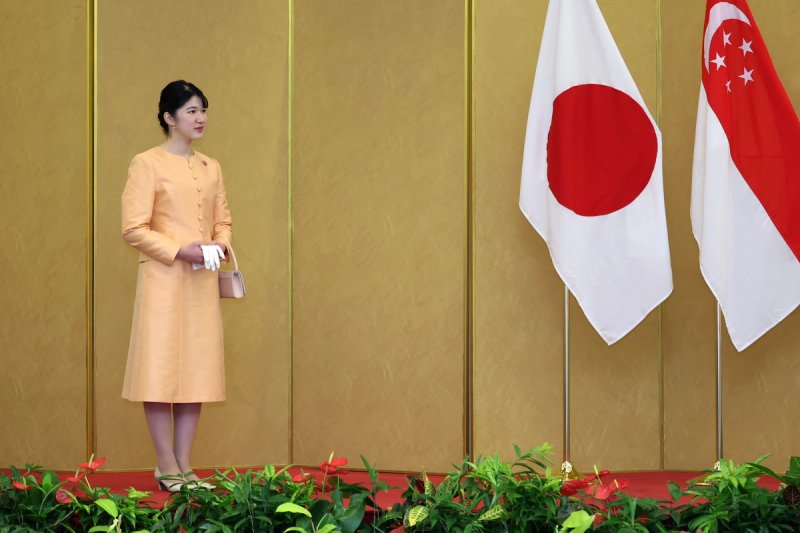
Japan’s Princess Aiko made an official visit (Opens in new window) to Singapore last week, as the two countries celebrate the 60th anniversary of diplomatic relations. Since 1966, Singapore and Japan have built strong diplomatic and economic links. Japan contributed significantly to Singapore’s early industrialisation through investments and technical cooperation (Opens in new window), and bilateral cooperation has since expanded into defence, research, environment, and cultural exchanges.
In March 2026, prime ministers Lawrence Wong and Sanae Takaichi elevated bilateral ties to a Strategic Partnership (Opens in new window). The two countries agreed to strengthen cooperation in several areas, such as healthcare technology, research and development, aged care, and health regulation, among others.
This is timely. In 2026, Singapore entered the ranks of “super-aged (Opens in new window)” societies, with 21.4% of its citizen population aged 65 and above. Japan, which is further along in the demographic trajectory (Opens in new window), became the world’s first “super-aged” society in 2006, and thus has spent decades navigating the economic and social challenges of an ageing population.
Ageing will test not only healthcare systems and labour markets but also the social contract between generations.
During its industrialisation in the 1970s and 1980s, Japan was an important reference point for Singapore’s economic modernisation. Singapore studied Japanese industrial discipline and social systems (Opens in new window), adopting practices such as quality control circles, house unions, and the koban (neighbourhood police posts).
But learning was never entirely one-directional. Today, Singapore has grown into an economic powerhouse, with its own experiences and capabilities to offer.
Princess Aiko in Singapore at the Japan Association on 19 November 2026 (The Asahi Shimbun via Getty Images)
Singapore, meanwhile, brings a complementary set of strengths (Opens in new window) in digital government, integrated public service infrastructure, and technology-enabled service delivery. It is also home to a growing number of ageing technology firms (Opens in new window), which are developing innovative solutions in cognitive health, fall detection and home monitoring. These capabilities could open up opportunities to explore new approaches to preventive healthcare and community-based care, supported by technology.
Singapore also offers relevant policy experience. One example is Healthier SG (Opens in new window), which emphasises preventive care through personalised health plans and community-based health promotion. It also aims to foster closer relationships between individuals and their primary healthcare providers, while supporting more seamless care delivery through digital platforms. While Japan has its own longstanding preventive healthcare programs (Opens in new window), Singapore’s experience offers a useful point of comparison, particularly in integrating digital health services with primary and community care. This could provide insights for Japan as it explores ways to improve coordination across its healthcare ecosystem.
Besides policy and institutional learning, there are also practical opportunities for bilateral collaboration in technology. In May 2026, for instance, Singapore’s Lions Befrienders and Kwong Wai Shiu Hospital partnered with Japan’s Kanamic Network to launch an AI-enabled eldercare pilot project (Opens in new window). This initiative explores how artificial intelligence solutions can be adapted and localised for the Singapore context, with the goal of improving documentation and scheduling efficiency, and potentially reducing administration burden on frontline caregivers.
Such partnerships allow both countries to examine how different institutional contexts and technological capabilities can work together. Rather than pursuing wholesale policy transplantation, Singapore and Japan recognise that their institutions and social expectations differ. The value therefore lies in adaptation: identifying transferable practices and tailoring them to suit each country’s unique circumstances.
Ageing will test not only healthcare systems and labour markets but also the social contract between generations (Opens in new window). There are no easy solutions, but international cooperation can help countries pool expertise, accelerate research and innovation, and address fiscal and structural barriers that individual governments may struggle to overcome alone.
Beyond bilateral exchanges, existing ASEAN–Japan cooperation frameworks, including Japan’s support (Opens in new window) for the ASEAN Centre for Active Ageing and Innovation (ACAI) through the Japan-ASEAN Integration Fund (JAIF), provide a foundation for deeper regional collaboration. In line with Singapore’s 2027 ASEAN Chairmanship priorities of “Deeper Integration, Wider Partnerships (Opens in new window)”, Singapore could work with ASEAN and partners like Japan to bring together governments, businesses, and research institutions to share best practices and advance ageing-related technologies and services. Such efforts should be grounded in regional co-creation and recognise the diverse demographic profiles and fiscal capacities of ASEAN member states.
In Japanese tradition, turning 60 marks kanreki – the completion of the full zodiac cycle and a fresh start. For Singapore and Japan, this milestone could likewise mark the beginning of a new chapter: one in which the two countries work together, and alongside the wider region, to navigate the difficult question of how to grow old with dignity and resilience.